
Last updated November 25, 2026
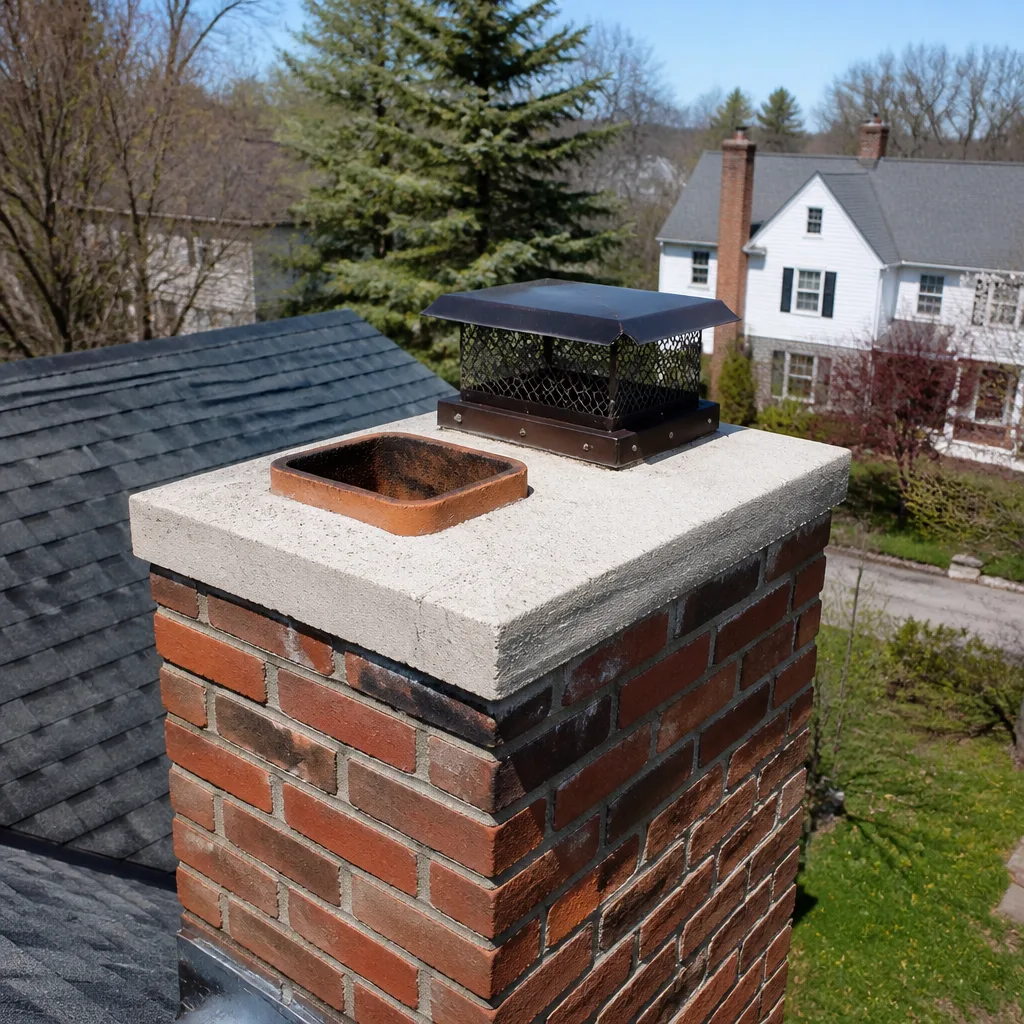 Sweep & inspection
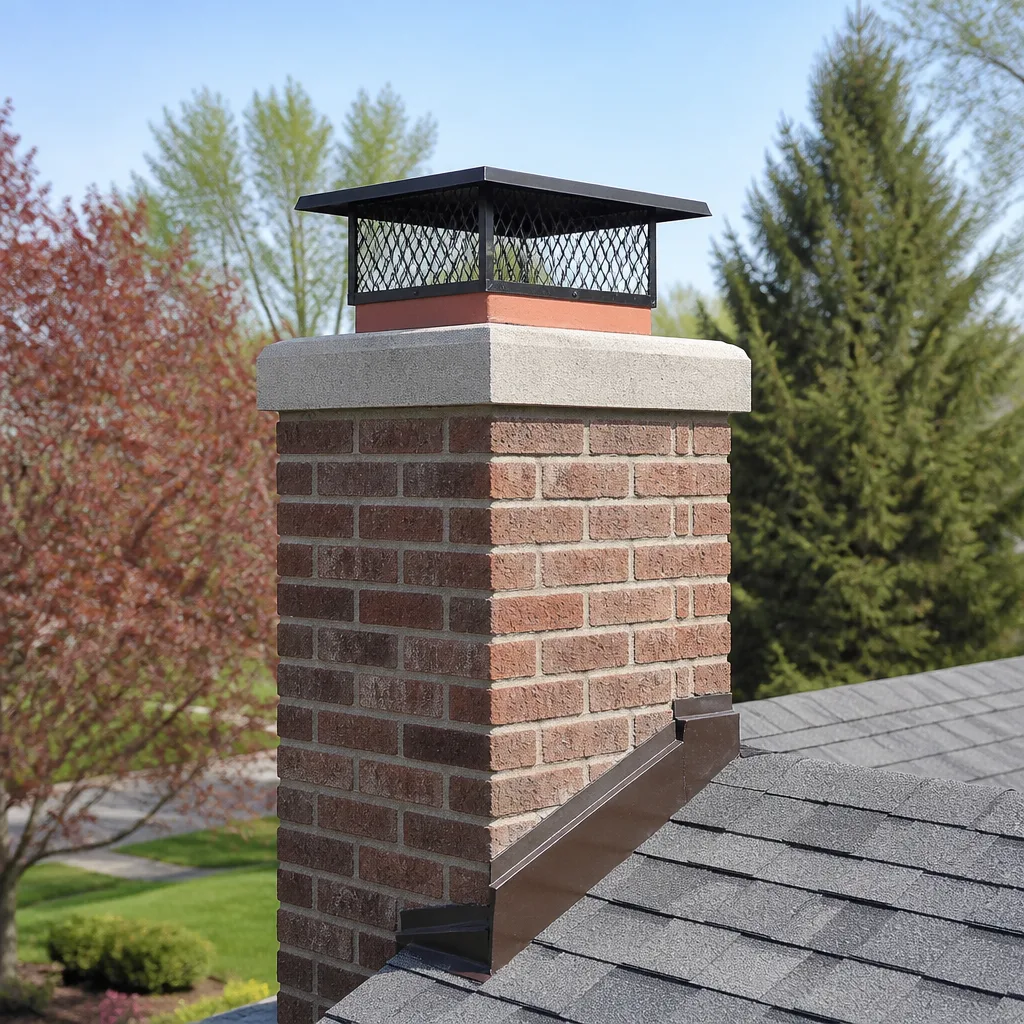 Caps & crowns
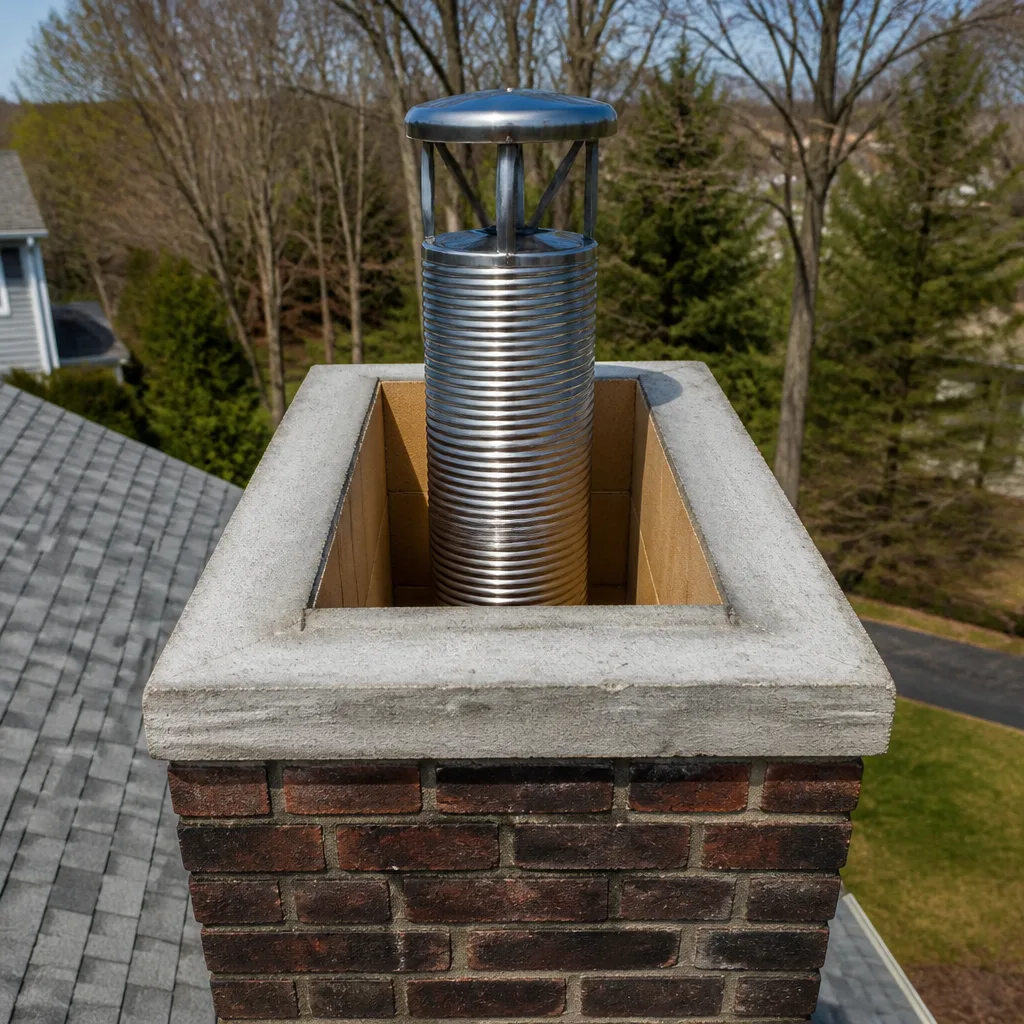 Flue relining
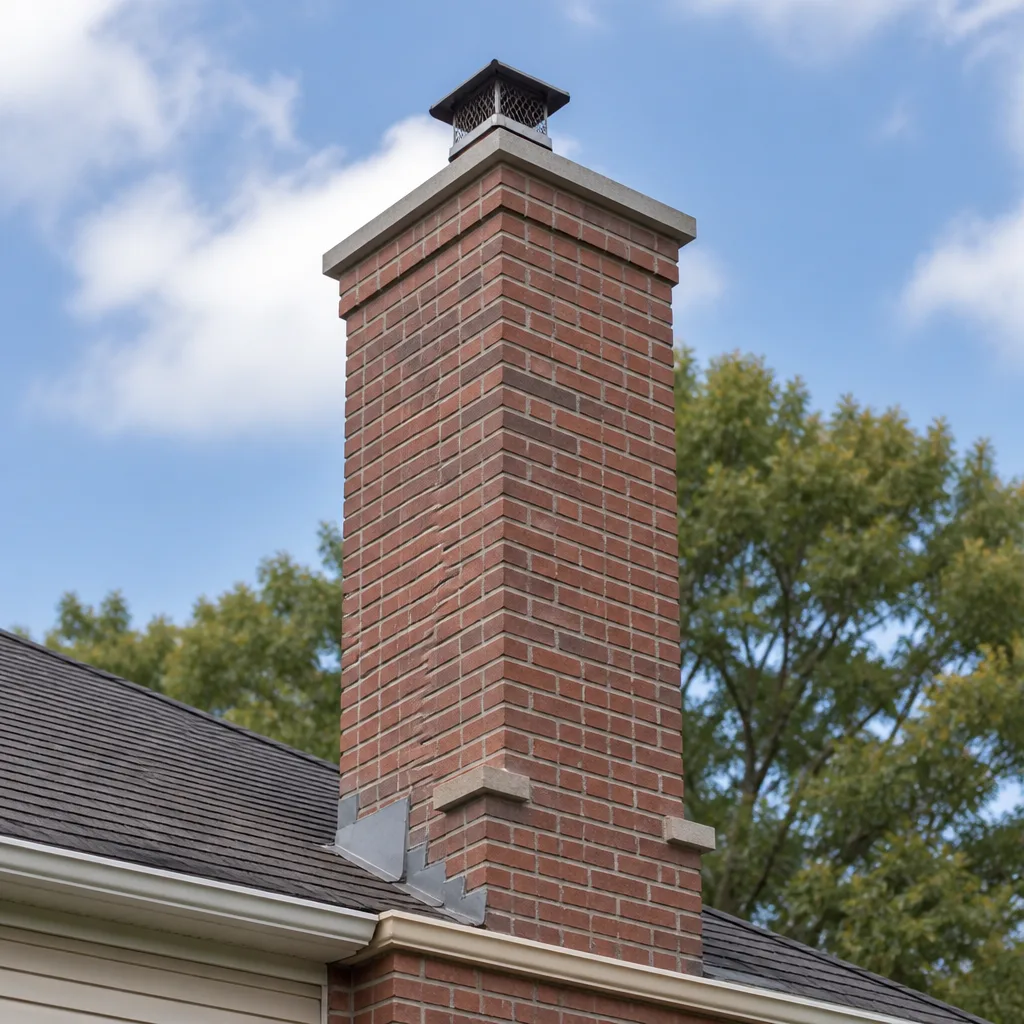 Masonry repair
 Gas fireplace service
Level 1 sweep and inspection to the NFPA 211 annual standard - flue, crown, cap, and flashing checked and photographed
Chimney sweep logs do not sweep chimneys. They loosen some creosote - which then falls where a brush and vacuum still have to collect it.
DIY vs Professional Chimney Cleaning: The St. Albans Homeowner’s Decision Guide
Here’s the part most DIY guides leave out: cleaning a chimney is the easy half. You can buy a brush kit, get on the roof, and physically remove soot from your flue. What you can’t do from the top of a ladder is confirm whether the tile liner you just cleaned has a hairline crack feeding carbon monoxide into the wall cavity behind your living room. That gap between cleaning and knowing is the entire decision. This guide walks through what a professional visit actually delivers beyond a swept flue, where DIY genuinely makes sense, and how St. Albans homeowners can tell the two apart before lighting another fire.
Quick Answer
Professional chimney cleaning is worth it for most St. Albans homeowners because the visit includes a diagnostic inspection that DIY cannot replicate: camera verification of the flue interior, draft testing, and a written record of the chimney’s condition. DIY makes sense for exterior maintenance like cap cleaning and ash removal between professional sweeps. The cleaning itself is not the hard part. The knowing is.
Styles & brands we work with
- Sweep & inspection
- Caps & crowns
- Flue relining
- Masonry repair
- Gas fireplace service
Table of Contents
- What a Professional Chimney Sweep Actually Delivers
- What You Cannot See Without a Camera Inspection
- The Equipment a Professional Brings That Changes the Diagnosis
- Where DIY Is Genuinely Appropriate
- Liability and Insurance: What Happens After a Chimney Fire
- The Break-Even Math for St. Albans Homeowners
- Why St. Albans Chimneys Age the Way They Do
- Common Mistakes to Avoid
- When to Call a Professional
What a Professional Chimney Sweep Actually Delivers
A professional sweep is two services bundled into one visit: the physical cleaning and the inspection. The cleaning removes creosote, soot, and debris from the flue. The inspection answers a different question entirely: is this chimney safe to use, and if not, what specifically is wrong?
At Chimney Sweep St. Albans, those two halves run together. The same specialist who sweeps the flue is the one who inspects it, photographs what’s inside, and flags any defect worth your attention. There’s no handoff to a separate inspector, no second appointment, no gap between diagnosis and the person recommending the repair. Chimney work is all we do, so the inspection isn’t a bolt-on. It’s the point.
Here’s what a full professional visit typically includes, and what a DIY sweep does not:
- Mechanical flue cleaning with rotary or brush systems sized to the flue’s actual dimensions
- Level 1 inspection – the standard visual inspection of the firebox, damper, smoke chamber, and accessible flue
- Level 2 video inspection when the chimney has changed hands, changed fuel type, or shows signs of damage
- Draft verification to confirm the chimney is actually pulling smoke out of the house
- A written report with photo documentation of what was found
- Debris containment using drop cloths and a vacuum rated for fine soot, so your floor stays clean
That last point matters more than it sounds. Soot is fine, it travels, and it stains. A homeowner sweeping with a brush and a shop vacuum will spread a significant amount of it through the living space. Professional setups use negative-pressure vacuums that keep the dust inside the flue until it’s captured.
What You Cannot See Without a Camera Inspection
The single biggest argument against DIY chimney cleaning is not that you’ll do a bad job scrubbing. It’s that you physically cannot see the things that matter most.
From the top of the flue, looking down with a flashlight, you see maybe the first few feet of liner. Below that, the flue curves, changes diameter, or passes behind the smoke chamber. That’s where failures live:
- Hairline cracks in clay tile liners – often invisible until they’ve already allowed heat or carbon monoxide into adjacent framing
- Gaps at tile joints – the mortar between tiles can fail without any outward sign
- Spalled or flaking tile – the inner face can break down while the outer face looks intact
- Offset or warped flue sections – common in older chimneys that have shifted with the house
- Creosote glazing – third-degree creosote looks like a shiny black surface, not something you can brush off
- Cracked crown or compromised cap – water intrusion at the top that damages the liner from above
- Bird and animal nests – often lodged in the smoke chamber, well below the visible top
A Level 2 video inspection runs a camera through the entire flue and records what it finds, so you see the same image the technician sees. That’s the standard we hold ourselves to at Chimney Sweep St. Albans: if we recommend work, we show you why. If we can’t show it, we don’t recommend it.
The Equipment a Professional Brings That Changes the Diagnosis
Some of the equipment question is about cleaning better. Some of it is about diagnosing better. The second category is the one homeowners underestimate.
Cleaning-side equipment:
- Rotary cleaning systems – motorized whips with flexible rods sized to the flue; these reach around bends where a straight brush stalls
- Fitted poly brushes – measured per flue, not one-size-fits-all, so the brush actually contacts the liner wall
- HEPA-rated chimney vacuums – the same reason hospitals use them, dust control
Diagnostic-side equipment:
- Video camera systems – a camera on a flexible rod feeds back to a monitor, recording the full flue run from crown to firebox
- Smoke pencils – puff a small amount of smoke at the firebox opening while a fire is burning; where it drifts tells you immediately whether the chimney is drafting correctly
- Draft gauges – measure pressure differentials to catch a flue that pulls but not strongly enough
- Moisture meters – check for water damage in masonry before it becomes structural
- Combustible gas detectors – verify that carbon monoxide isn’t leaking into occupied space
All of this is embedded in the visit. When a customer asks us what’s going to be used on their chimney, we can name it: HeatShield when a compromised flue needs a poured refractory liner, Gelco for crown and masonry work, Olympia Chimney components where the installation calls for them, Famco where it fits the application. We name the materials we use because you should ask.
Where DIY Is Genuinely Appropriate
We’re not going to pretend DIY has no place. Several chimney maintenance tasks are genuinely within reach for a careful homeowner, and doing them well extends the life of the chimney. Here’s where the line sits.
Tasks a homeowner can safely do
- Ash removal from the firebox once the fire is fully cold, using a metal bucket and a scoop. Never vacuum warm ash.
- Cap cleaning – clearing leaves and debris from a top-mounted cap, done with a ladder, a trowel, and a healthy respect for height. If the roof pitch is steep or the ladder angle feels wrong, stop and call a pro.
- Exterior visual checks – walking the ground level looking for missing mortar, cracked crown, or staining that indicates water intrusion. Binoculars work fine.
- Firebox and hearth cleaning – sweeping out soot from the firebox floor, wiping the glass door on a gas fireplace.
- Debris removal from the firebox before the first burn of the season – checking for anything a bird or squirrel deposited during the off-season.
Tasks that belong with a professional
- Anything inside the flue – brushing, rotary cleaning, or attempting to remove glazed creosote
- Any inspection of tile integrity, joints, or the smoke chamber – you can’t see what you can’t see
- Any repair, relining, crown work, or cap replacement – these are structural and code-relevant
- Draft diagnosis – smoke that backs into the room is a symptom, not the problem, and requires gauges to diagnose
For St. Albans homeowners with wood-burning fireplaces that see regular winter use, the professional sweep should still happen on the standard cadence. DIY in the firebox doesn’t replace it. It just keeps the firebox clean between visits.
Liability and Insurance: What Happens After a Chimney Fire
Most homeowners’ insurance policies don’t say “chimney must be professionally cleaned,” but the post-fire investigation is where the question surfaces. When a chimney fire damages the house, insurers routinely ask for proof of maintenance. In our experience, the absence of any record of professional inspection is where claims hit trouble.
Here’s how it plays out in practice:
- Your policy generally requires you to maintain the property in a safe condition. A chimney that hasn’t been swept in years is arguably not maintained.
- After a claim, the insurer may ask for cleaning receipts, inspection reports, or service records. If you DIY’d, there’s no third-party record.
- If the insurer determines the fire resulted from neglected maintenance, they may reduce the claim or deny it. That determination depends on your policy language and local rules, but the possibility exists.
- If you sell the house and the buyer’s inspector finds a failed liner, the discovery typically becomes a negotiating issue whether or not you disclosed anything.
We can work with your insurer if a report is needed after a claim, but we can’t retroactively create documentation for a chimney we never inspected. That’s the part homeowners discover too late. The record is worth as much as the sweep.
The Break-Even Math for St. Albans Homeowners
The straightforward economic question is whether DIY pays for itself faster than calling a professional. The answer depends on how often you burn and what fuel you use.
Chimney sweeping frequency guidelines are based on use, not on the calendar. The industry standard: sweep when creosote has accumulated to roughly 1/8 inch on the flue wall. For a household burning a cord or two of wood per season, that typically lands at one sweep per year or every other year. For heavy wood burners, or for a fireplace used as a primary heat source, annual is the minimum. Gas and oil appliances have their own service cadence, generally annual.
Here’s how the comparison shakes out:
| Scenario | Sweep frequency | What a pro visit delivers |
|---|---|---|
| Light use – one or two fires a month | Every 2 – 3 years | Sweep plus baseline inspection; strong value per year |
| Regular use – most winter weekends | Annually | Sweep, inspection, and trend line on liner condition |
| Heavy use – primary or supplemental heat | Annually, sometimes twice | Sweep and active monitoring for liner fatigue |
Cost of professional sweep work in St. Albans generally runs within a range that most homeowners will spend on coffee across a few months. The comparison isn’t the professional fee versus the DIY brush kit’s purchase price – it’s the professional fee versus what an undetected liner failure costs to repair. HeatShield relining is more than a sweep. It’s less than a house rebuild. The break-even point for DIY is essentially “only if you rarely burn.” For anyone heating with wood in St. Albans, the professional visit pays for itself in diagnosis alone.
If you’d like exact pricing for your chimney, chimney sweep estimates in St. Albans are free and set by a written quote before any work happens.
Why St. Albans Chimneys Age the Way They Do
St. Albans housing stock skews older. Homes built in the first half of the twentieth century often have clay-tile liners that were sized for coal or early wood appliances, not the higher-efficiency stoves that replaced them. When a modern wood stove is vented into a flue originally designed for a different appliance, the flue runs cold, creosote forms faster, and the liner ages harder than it would in a matched system.
The local climate adds its own pressure. St. Albans sees real winters, and the freeze-thaw cycle that comes with them is unforgiving to masonry. Water gets into a hairline crack in the crown, freezes overnight, expands, and widens the crack. Next spring it’s a bigger crack. By the following winter, it’s a water intrusion that’s been quietly wetting the flue liner for two seasons. Homes near the higher ground around St. Albans tend to show this pattern first, because wind exposure accelerates the drying cycle that widens cracks.
What this means for a St. Albans homeowner is that the sweep is more than a seasonal ritual. It’s the annual data point that tells you whether the chimney is trending in the right direction. If we inspect your chimney this year and it’s in good shape, next year’s visit gives us a comparison. Without the first visit, there’s no baseline.
When we do find a compromised flue, the fix isn’t guesswork. chimney repair under those conditions typically involves a HeatShield pour-in liner or a DuraFlex flexible liner system, both designed for long-term flue protection rather than a temporary patch. Any cap or crown work uses the same approach, with brands like Gelco and Olympia Chimney where the install calls for them. See our chimney cap & crown page if you want to understand what proper top-end protection looks like.
Common Mistakes to Avoid
- Buying a brush kit sized by “average flue.” Flues aren’t average. A brush that’s too large jams, a brush that’s too small skips the liner wall, and a rotary system that catches an offset tile can crack the tile you were trying to clean.
- Assuming a clean firebox means a clean chimney. Soot accumulates in the smoke chamber and flue long before the firebox looks dirty. The firebox is the last place to show trouble.
- Burning unseasoned wood to “save money.” Green wood generates far more creosote per cord, which means more frequent sweeping and faster liner aging. Well-seasoned hardwood is the cheapest chimney maintenance you’ll ever buy.
- Ignoring the crown. St. Albans masonry weathers, and a cracked crown is the most common entry point for the water that shortens a liner’s life. Hairline cracks that seem harmless in October become real problems by January.
- DIY-ing a gas fireplace service. Gas appliances have their own safety requirements, and an amateur cleaning can dislodge a component that was holding a seal. Don’t.
- Skipping a Level 2 video inspection on a home purchase. A general home inspector’s report on a chimney is not an inspection of the flue. The two are different, and only one of them sees what’s behind the tile.
- Cleaning a chimney while a fire is burning or while any hot ember remains. Soot and creosote travel through the chimney as dust that will ignite on contact with hot metal. Wait.
When to Call a Professional
Call a professional any time the question is not “is my flue dirty?” but “is my flue safe?” Specific situations that should trigger a call:
- You’ve never had the chimney inspected, or you’ve just bought a home that has one
- You’re switching fuel types – wood to gas, gas to wood, wood to pellet
- You’re adding a new appliance like a wood stove insert or a high-efficiency fireplace
- Smoke rolls back into the room when you burn, or the fire is hard to start and dies down
- You notice staining on the wall near the chimney, or a smell of creosote in warm weather
- You’ve had a chimney fire, even a small one, and haven’t inspected since
- The crown or cap looks damaged from the ground
- You’re burning more than a cord of wood per winter
Chimney Sweep St. Albans offers free estimates in St. Albans – call (833) 468-5934. We answer 24/7. Fast dispatch from 7am to 7pm, Sunday through Friday, closed Saturday.
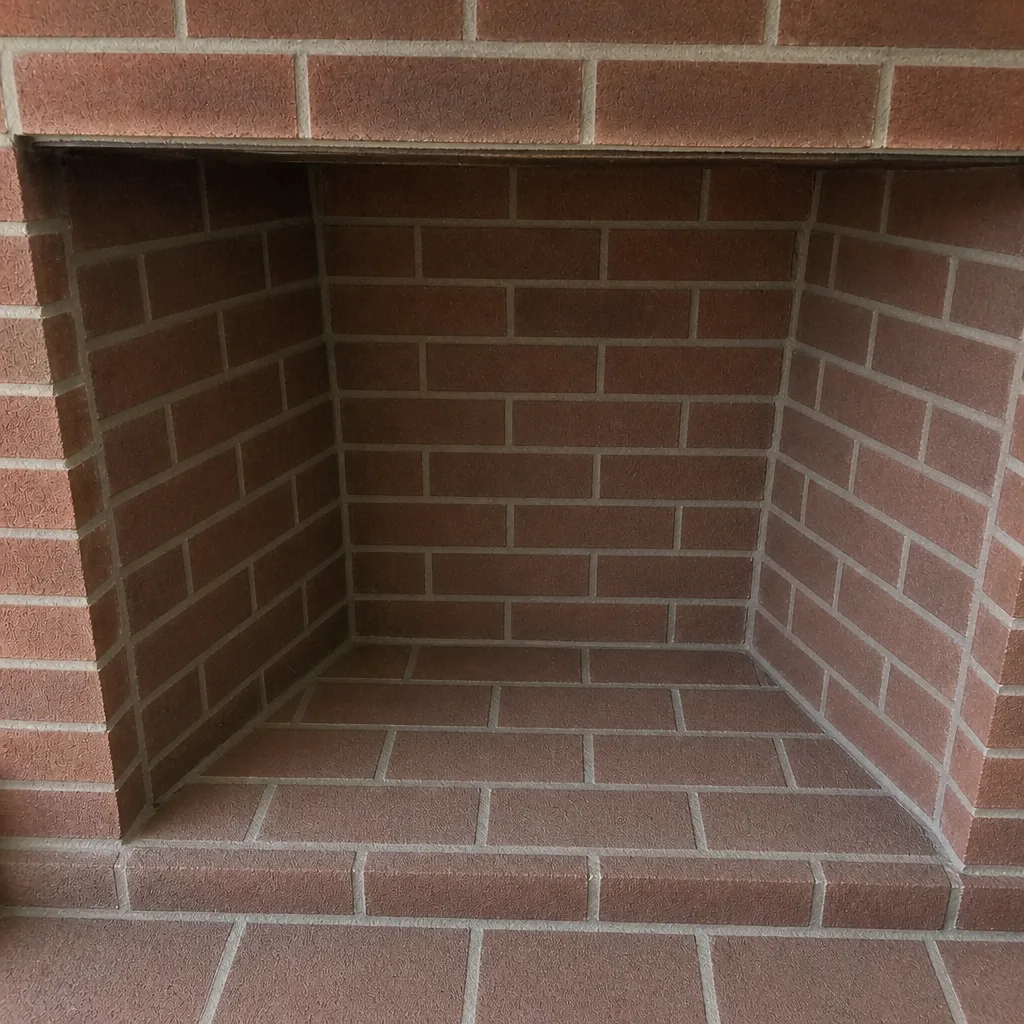
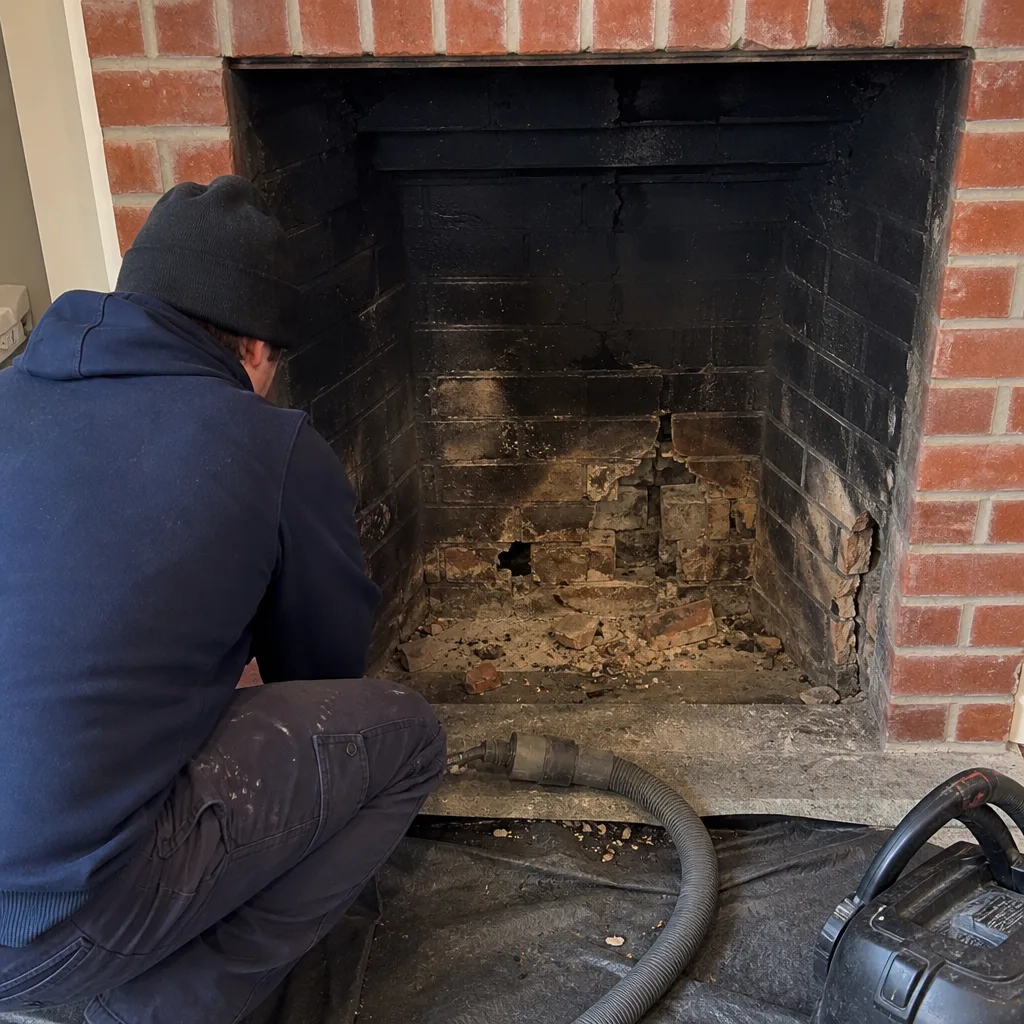
See the difference
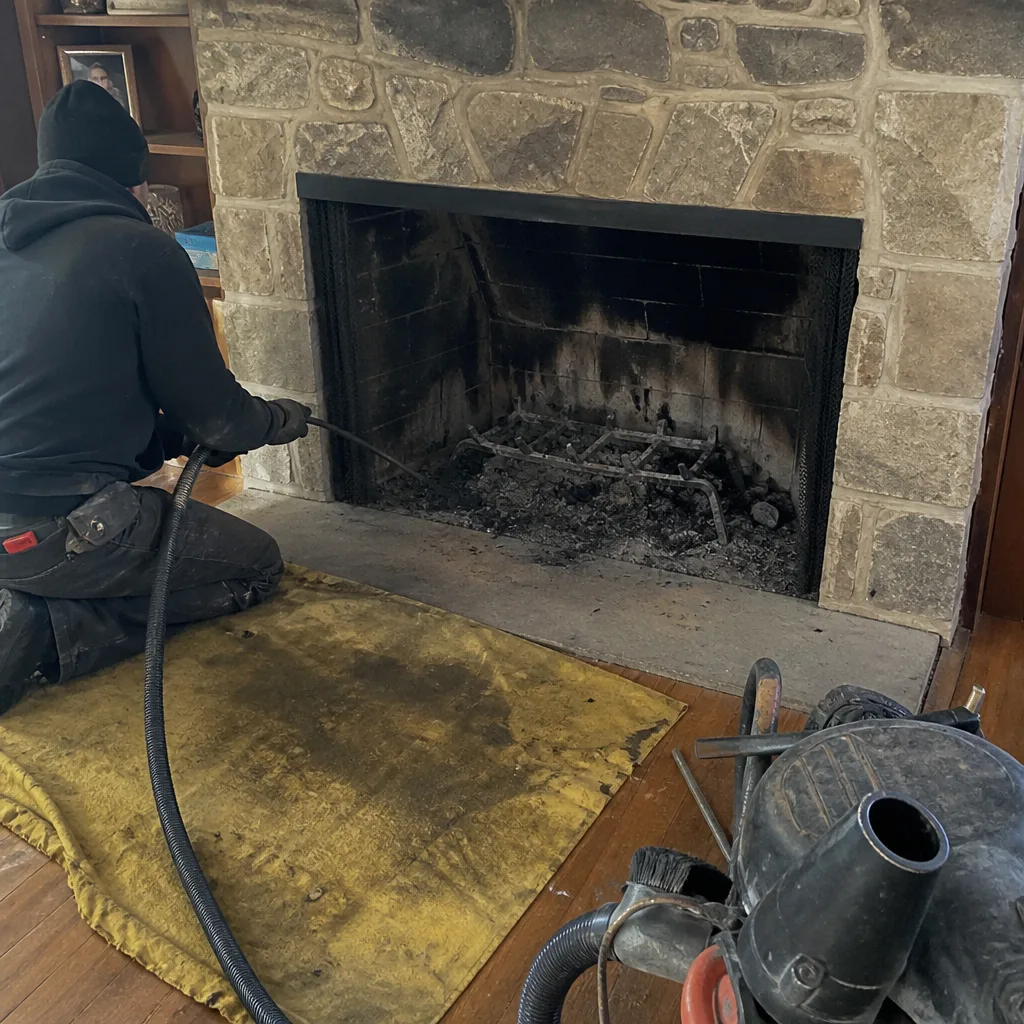 Before
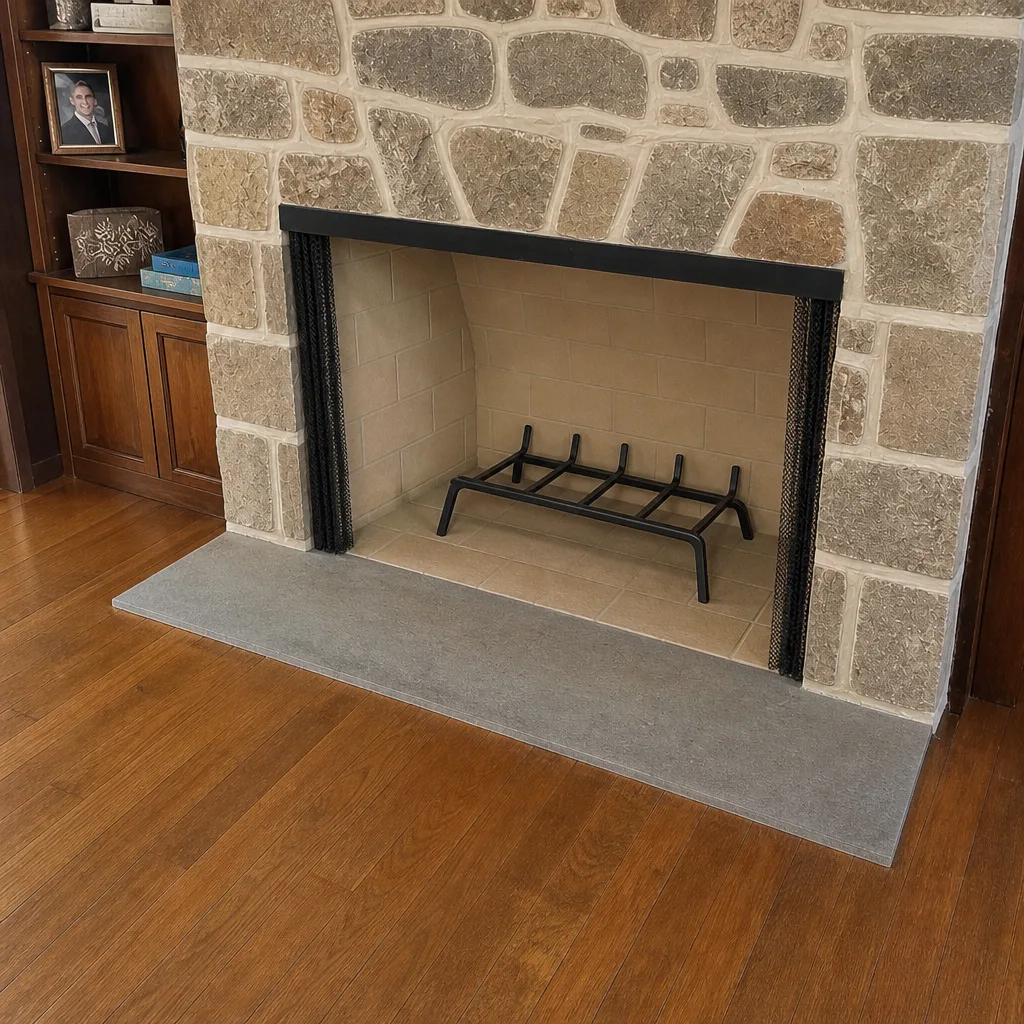 After
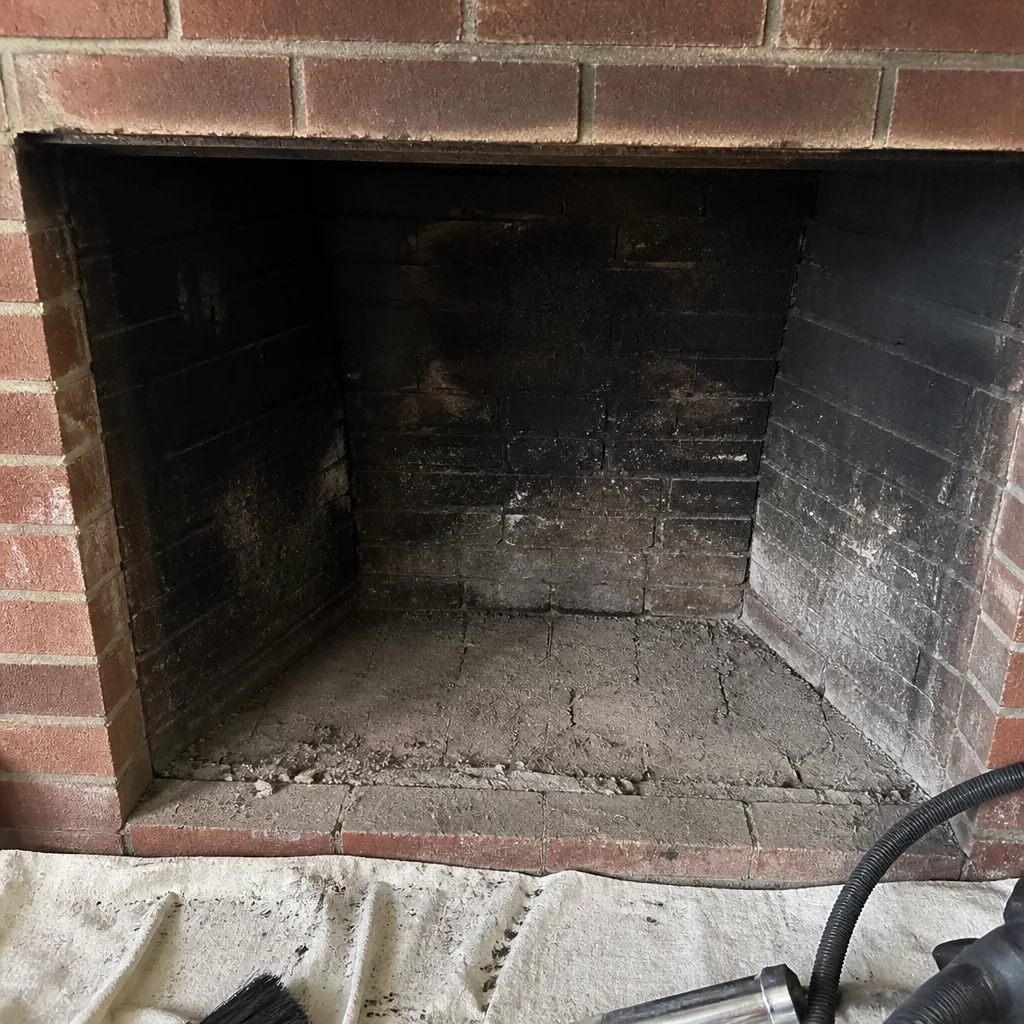 Before
 After
 Before
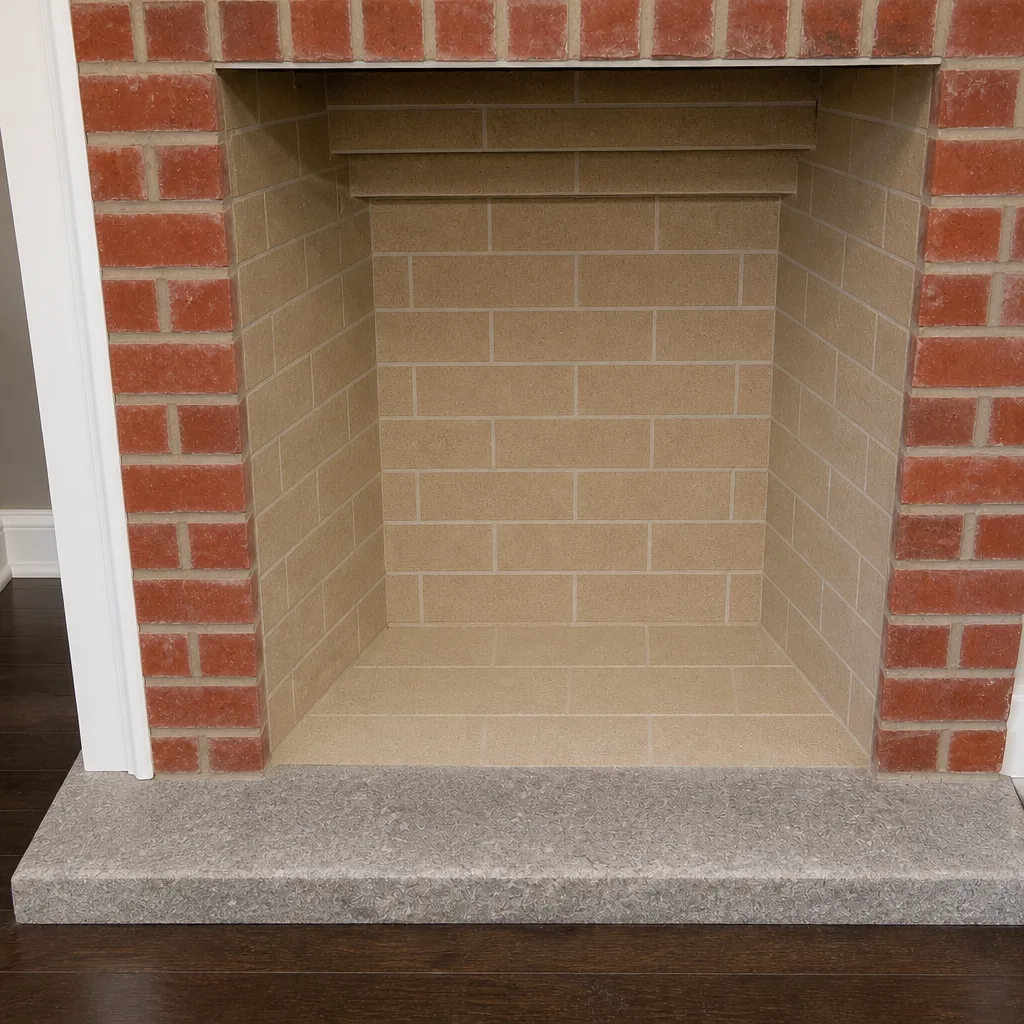 After
Frequently Asked Questions
A standard chimney sweep in St. Albans is estimated per job, with a written estimate provided before any work starts. The price reflects your chimney’s size, condition, and whether a Level 2 video inspection is included. Call (833) 468-5934 for an exact quote – estimates are free.
You can physically sweep soot from your flue, but you cannot see the tile liner, the joints, or the smoke chamber without a camera. The risk of an undetected liner crack is the reason most homeowners choose professional cleaning: the sweep is the entry point, and the inspection is the point. If a chimney is used regularly in St. Albans, the professional visit is the one that actually protects the house.
Sweep when creosote has built up to roughly 1/8 inch on the flue wall, which for most regular-use wood burners in St. Albans means annually. Light use stretches to every two or three years. Gas and oil appliances should be serviced annually regardless. Call for an inspection if you’re not sure – we can tell you from the flue condition whether a sweep is due.
Creosote accumulates, draft weakens, and the eventual risk is a chimney fire or carbon monoxide intrusion through a failed liner. The problem builds invisibly, which is why the schedule matters more than how the chimney looks. Call (833) 468-5934 if it’s been more than a season.
A Level 1 inspection is the visual inspection included with a routine sweep, covering accessible parts of the firebox, damper, and flue. A Level 2 inspection adds a video camera run through the entire flue, and it’s what you want on a home purchase, after a chimney fire, or when there’s any question about liner condition. Both are available in St. Albans when we visit.
We diagnose and repair the same chimney in most cases – no second contractor to book, no disconnect between inspection and fix. Common repairs include HeatShield relining, crown rebuilding with Gelco materials, and DuraFlex flexible liner installation where the flue has failed. Call (833) 468-5934 to schedule an inspection; the written estimate sets the final price.
The Bottom Line
The DIY-versus-professional question is a real one, but it’s not answered by comparing the price of a brush kit to the price of a sweep. It’s answered by comparing what you get for the price. DIY gets you a physically cleaned firebox. Professional cleaning gets you a cleaned flue, a Level 1 or Level 2 inspection, a written record of the chimney’s condition, a camera-verified diagnosis if anything’s wrong, and a repair path with one specialist rather than three. For any St. Albans homeowner who heats with wood, the inspection half of the visit is worth more than the cleaning half. Call (833) 468-5934. We answer 24/7. Fast dispatch from 7am to 7pm, Sunday through Friday.
Written by the team at Chimney Sweep St. Albans.