
Last updated November 25, 2026
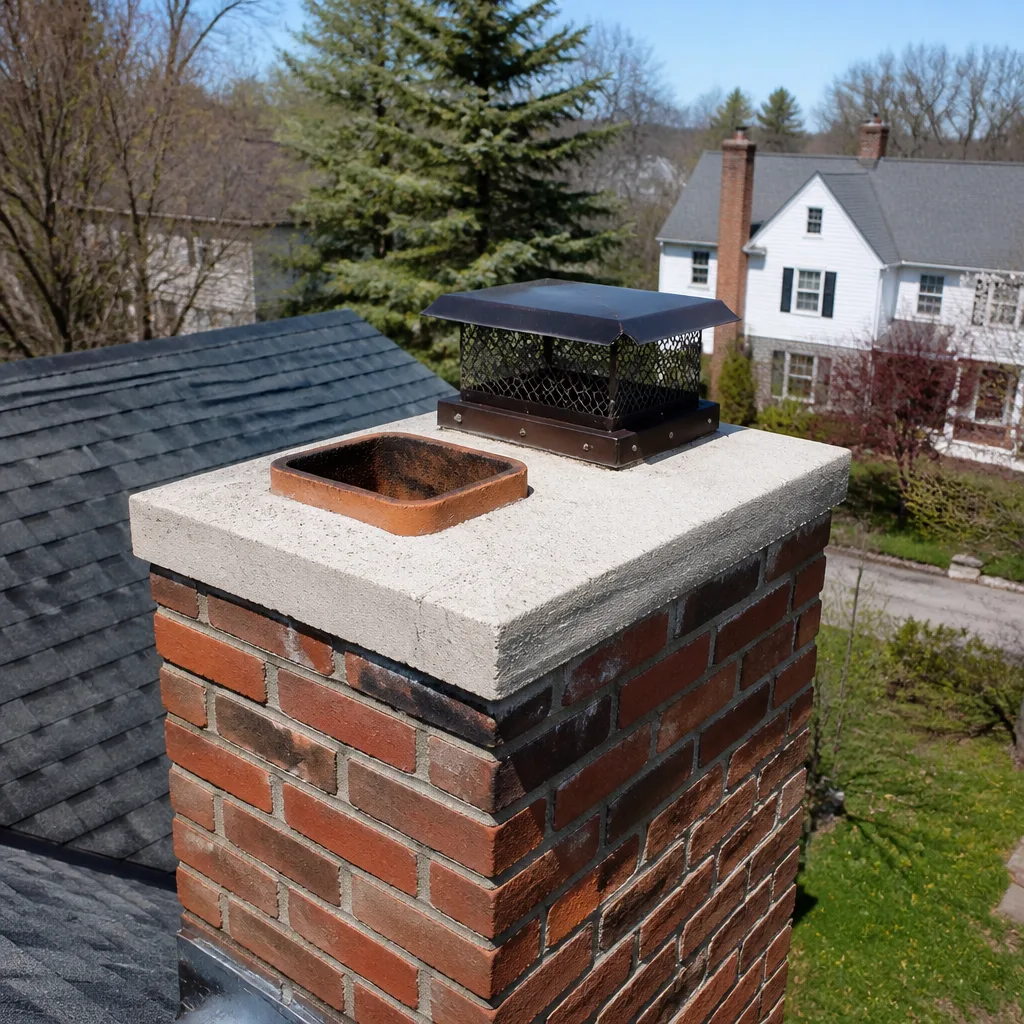 Sweep & inspection
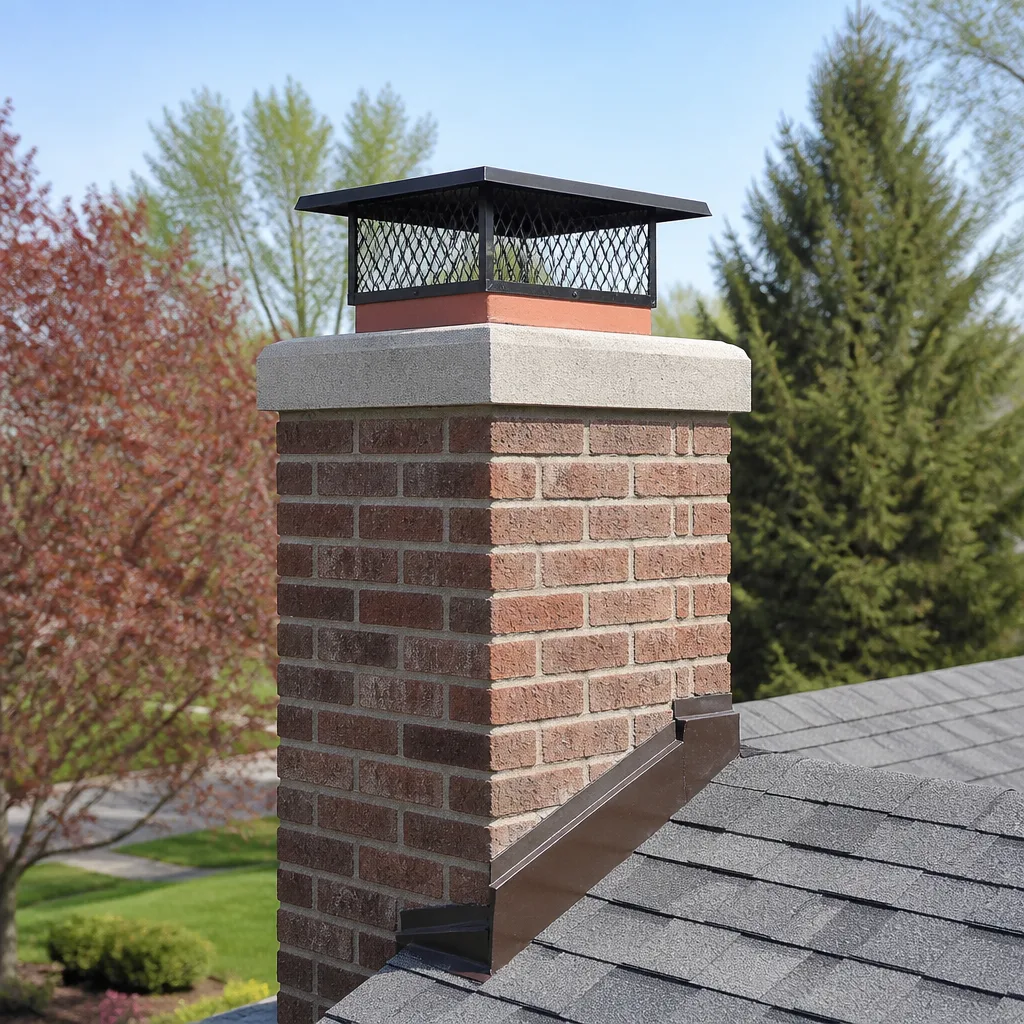 Caps & crowns
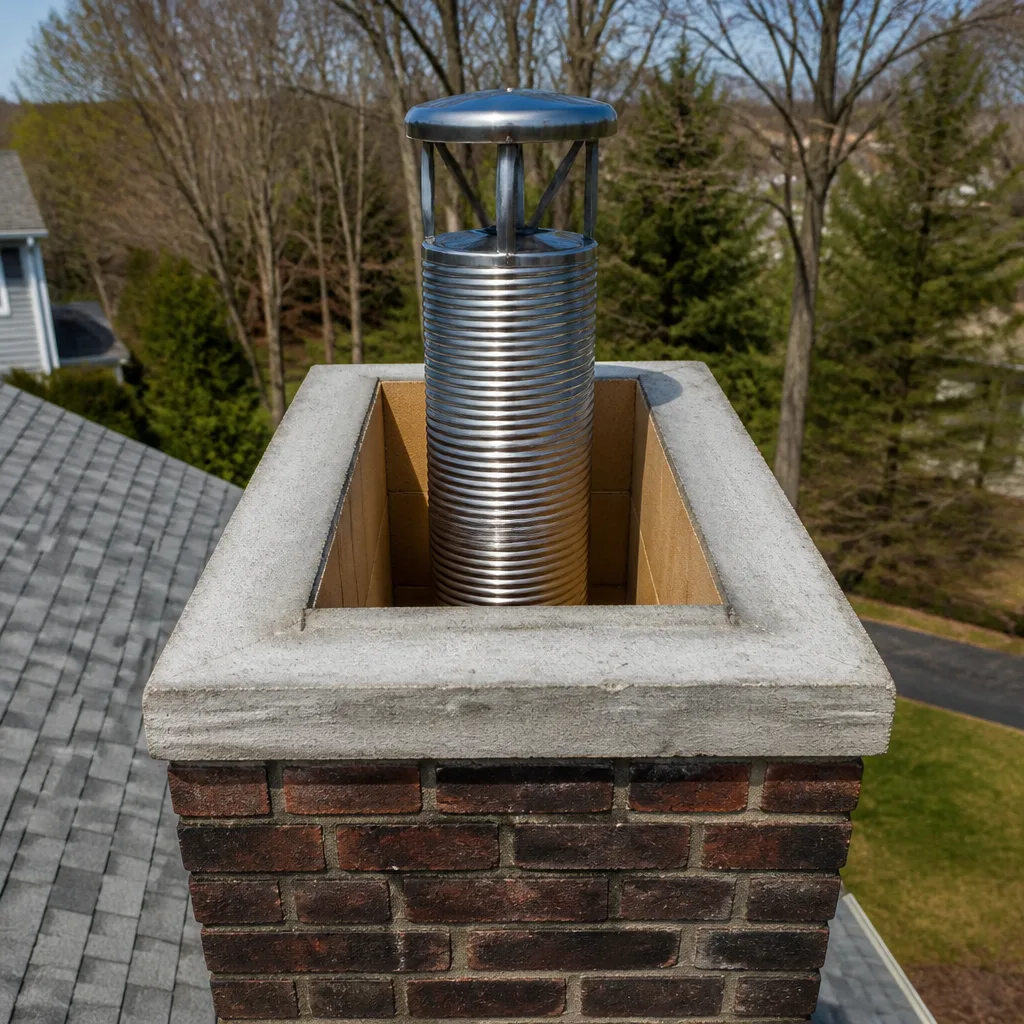 Flue relining
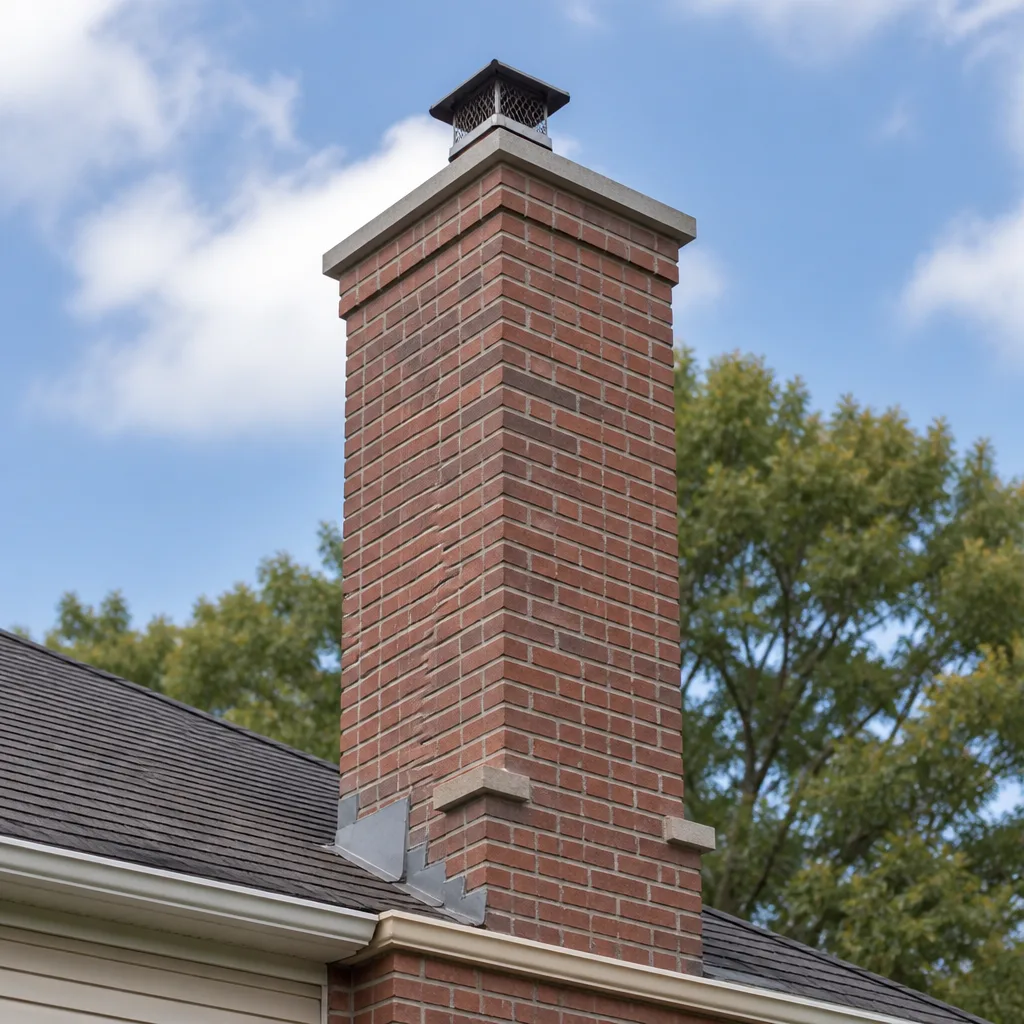 Masonry repair
 Gas fireplace service
Level 1 sweep and inspection to the NFPA 211 annual standard - flue, crown, cap, and flashing checked and photographed
Chimney sweep logs do not sweep chimneys. They loosen some creosote - which then falls where a brush and vacuum still have to collect it.
Chimney Cleaning Warning Signs: A St. Albans Homeowner’s Reference Guide
White staining on the outside of a chimney looks like a cosmetic problem, so most people paint over it. It isn’t cosmetic. That staining is efflorescence, and it means water is already moving through the masonry from the inside out, carrying dissolved salts to the surface as it evaporates. By the time you can see it, the brick or block has been wet for a while. Most warning-sign guides list symptoms and stop there. This one connects each sign you can actually see, smell, or hear to the structural or combustion problem underneath it, so you understand what’s happening inside the flue rather than guessing. We’ll cover smoke behavior, smells from an idle fireplace, cracking, damper trouble, and the sound of a chimney fire, all in the context of the older housing stock and heating patterns here in St. Albans.
Quick Answer
The main chimney cleaning warning signs are a strong creosote smell, smoke that backs into the room, white staining or crumbling mortar on the exterior, cracked or loose flue tiles, water in the firebox, a stubbornly stuck damper, and any roaring sound during a burn. Any one of these points to a specific problem: excess creosote, a draft failure, water intrusion, or a flue that’s no longer intact. If you see more than one at once, the chimney needs a professional inspection before you light another fire.
Styles & brands we work with
- Sweep & inspection
- Caps & crowns
- Flue relining
- Masonry repair
- Gas fireplace service
Table of Contents
- What Creosote Buildup Actually Signals
- What Smoke Behavior Tells You About Draft
- Smells From an Idle Fireplace
- Efflorescence: Water Moving Through Masonry
- Telling Settling Cracks From Active Movement
- Damper Warning Signs Homeowners Ignore
- The Sound of a Chimney Fire
- Exterior Signs Worth Climbing Down to Check
What Creosote Buildup Actually Signals
Creosote is the residue left behind when wood smoke cools before it exits the flue. That cooling is the key mechanism. A properly drafting chimney carries hot smoke up and out quickly, leaving relatively little behind. When smoke lingers, it condenses on the flue walls, and the deposit builds in layers. The first stage is soft and sooty and sweeps off easily. The second stage is flaky and crusted. The third stage is a hard, glazed, tar-like coating that bonds to the flue surface and won’t come off with a standard brush.
So creosote buildup isn’t just “dirt in the chimney.” It’s a readout of how well your chimney is drafting and how completely your wood is burning. A few things drive it:
- Unseasoned or wet wood. Wood with high moisture content spends its heat boiling off water instead of burning cleanly, which produces more smoke and more condensation.
- Cool flue temperatures. An exterior chimney on a cold wall runs cooler than an interior one, so smoke cools faster and deposits more.
- Restricted air supply. A fire starved of oxygen smolders, and smoldering produces the heaviest, stickiest smoke.
- Oversized or undersized flue. A flue too large for the appliance lets smoke slow down and cool; too small and it can’t move the volume.
That third-stage glazed creosote is the dangerous one, because it’s the fuel load that feeds a chimney fire. When we sweep a St. Albans chimney and find glazed deposits, the conversation moves from cleaning to whether the flue can be brought back to a safe condition, which sometimes means a relining system such as HeatShield rather than years of repeat brushing. Our technicians have up to 11 years of experience reading that buildup and knowing what the layer tells us about how the fire has been running. If you’ve never had the flue inspected, a chimney sweep is the right starting point.
What Smoke Behavior Tells You About Draft
Smoke entering the room is the warning sign most people notice first, and it’s also the most widely misdiagnosed. There’s a real diagnostic difference between smoke that spills on startup and smoke that backdrafts during a sustained burn, and treating them as the same problem wastes time and money.
Startup spillage
Smoke that puffs into the room for the first few minutes of a fire, then settles down and draws normally, is a cold-flue problem. The flue is full of cold, dense air that has to be pushed out before warm smoke can rise. On a cold morning in St. Albans, this is common in chimneys that sit on an exterior wall. It’s often a draft initiation issue, not a blockage. Pre-warming the flue with a rolled newspaper held near the damper can help start the draft, but if startup spillage becomes the norm, the flue needs looking at.
Sustained backdrafting
Smoke that continues to roll out of the fireplace opening well into a steady burn is a different animal. That’s a pressure or obstruction problem, and it points to one of a few causes:
- A partial or full blockage. A nest, a collapsed flue tile, or heavy creosote narrowing the flue will cause back pressure once the fire is producing real volume.
- Negative pressure in the house. Modern homes are tight, and kitchen exhaust fans, bathroom fans, or a furnace pulling combustion air can depressurize the house enough to overpower the chimney. A St. Albans house with a newer, well-sealed envelope and an older open fireplace runs into this.
- An oversized firebox opening relative to the flue. The flue can’t move the air volume the opening demands.
- Wind downwash. A shorter chimney or a poorly placed cap can let wind push smoke back down the flue.
Sustained backdrafting is the one to take seriously, because it can push carbon monoxide into the living space along with the smoke. If your fire only draws on calm days, that’s your clue.
Smells From an Idle Fireplace
A fireplace that smells strongly of creosote or soot when it’s not in use is telling you something the fire itself doesn’t. When the firebox is cold, the direction of air movement through the chimney can reverse. Warmer air in the house rises and escapes elsewhere, and the chimney becomes a path for air to come down, bringing the creosote smell with it. That’s an annoyance. A persistent sulfur or oil smell is different, and it points at liner condition.
If your heating appliance is oil-fired and you smell oil or a sulfur-like odor near the fireplace or flue, that’s a combustion byproduct finding its way into the living space, and it deserves prompt attention. An oil-fired appliance’s flue can corrode from the inside, particularly where condensation forms, and a compromised liner lets flue gases seep into the structure. Gas appliances have their own signature; a persistent smell near an idle gas fireplace is a reason to stop using it and call.
We’re chimney and fireplace specialists, so this is the kind of diagnosis we do rather than defer. When a St. Albans homeowner tells us the fireplace smells even when it’s off, the inspection looks specifically at the liner for cracks, gaps at the joints, or corrosion, and at whether the flue is correctly sized for the appliance it serves. Depending on what we find, the fix might be as straightforward as sealing and proper termination, or it might call for a flexible liner system such as DuraFlex. Ask us what’s going into your flue before any repair is booked, because a liner is only as good as the diagnosis behind it.
Efflorescence: Water Moving Through Masonry
Efflorescence is that white, powdery or crusty staining on brick or block. It’s salt drawn to the surface by moisture moving through the masonry. The water dissolves salts from inside the brick, carries them to the outside face as it evaporates, and leaves the salt behind. Seeing it means water is getting into the chimney somewhere and traveling through the material. It’s not a stain to scrub off and forget; it’s the visible end of a water path.
The water gets in through a few routes:
- An open or missing cap. A chimney with no cap lets rain straight down the flue, where it meets the flue lining and the smoke chamber.
- A failed crown. The concrete at the top of the chimney is sloped to shed water. When it cracks, water sits on the masonry below and soaks in.
- Failed flashing at the roof line. The metal that seals the chimney to the roof can pull away or corrode, and water tracks down the chimney sides.
- Spalling brick. Brick where the face has popped off is a sign saturation has gone through freeze-thaw cycles.
In St. Albans, the seasonal freeze-thaw pattern matters. Water that soaks in during a thaw, then freezes overnight, expands and pushes the masonry apart from the inside. Over a few seasons that’s how a solid chimney turns into a spalling one. The right response is to fix the source of the water at the top, then judge whether the masonry can be repointed. A chimney cap & crown installation addresses most of the entry points, and we work with Copperfield and Gelco components because they’re built for the weather cycles a roof-line chimney actually sees.
Telling Settling Cracks From Active Movement
Not every crack means the chimney is failing. Some are old and stable; others are the beginning of structural movement. Distinguishing them is one of the most valuable things an inspection does.
Settling cracks
A chimney that has settled a little is common in the older housing stock around St. Albans, where fireplaces were built into masonry walls long ago. These are typically narrow, hairline cracks at joints or where the chimney meets the roofline, and they don’t change width from year to year. They need watching and possibly sealing, but they’re not active failure.
Cracks from active movement
Cracks from active movement show different behavior. They grow, they widen at one end, or new ones keep appearing. A few characteristics to check:
- Width. A crack wide enough to take a coin, or one that’s widening, is a concern.
- Direction. Diagonal cracks stepping through mortar joints are more concerning than a single short flaw.
- Displacement. One side of the crack sitting proud of the other means the two sides have moved relative to each other.
- Separation at the roof line. A gap opening between the chimney and the roof structure points to movement.
- Interior signs. Cracks in the mortar crown, or flue tiles that are misaligned or cracked, often pair with exterior movement.
If a crack meets any of those, an inspection should look at the whole chimney, not just the mortar. Active movement is a structural concern, and a repair planned around cosmetics won’t hold. Chimney repair that lasts depends on finding the actual cause first. We do the inspection and the repair on the same visit where possible, so a diagnosis isn’t handed to a second contractor who has to start over.
Damper Warning Signs Homeowners Ignore
The damper is the most-ignored part of the whole system, and knowingly so, because the fire “still works fine.” A partially stuck damper lets enough air through to burn, so people adapt to it and stop noticing. But a damper that’s stuck open, stuck shut, or half-seated is a real problem.
What to watch for:
- Stuck open. The fire burns hot and fast, and the house loses heated air straight up the flue between fires. You’ll notice drafts on cold St. Albans mornings.
- Stuck shut or partly closed. Smoke comes into the room because the exhaust path is restricted. This is a common cause of startup spillage.
- Rope seal failure. A damper with a gasket or rope seal that’s torn sits unevenly, so the fire either runs poorly or leaks heat year-round.
- Rust or corrosion. A damper that won’t move smoothly, or squeals, or feels stiff, is often scaled from condensation and water intrusion elsewhere in the chimney.
Damper problems are also a canary for water. If the damper has rusted in place, look at the cap and crown above it. A damper that’s simply worn should be replaced, not forced; a damper that’s rusted from moisture means stopping the water source first. When you book a sweep, ask for the damper to be checked and operated as part of the service. It takes a minute and catches a problem that otherwise sits for years. Our technicians have up to 11 years of experience and have seen how long a partial damper can go unnoticed when the fire keeps burning.
The Sound of a Chimney Fire
A chimney fire isn’t always visible. Most people who’ve had one describe a deep, roaring sound, often compared to a freight train, along with a low rumble or popping from the flue. Some notice a hot, crackling noise or see flames coming from the top of the chimney. Others hear almost nothing and only realize what happened later when a sweep finds the damage.
If you think a chimney fire is happening, the first 60 seconds matter. Here’s what to do:
- Get everyone out of the house. This is the first priority, before anything else. Close the firebox doors on the way if they’re within arm’s reach, but don’t delay.
- Call the fire department. Even if the sound stops, a chimney fire can be reigniting inside masonry or have damaged the flue in ways you can’t see.
- Don’t put water on the fire. Water hitting a hot firebox or flue can cause cracking and steam injuries.
- Stay out until the fire department clears it. Don’t re-enter to check the fire, and don’t relight until a professional inspection confirms the flue is intact.
After any suspected chimney fire, the flue needs an inspection before use. A fire can crack flue tiles or distort a metal liner, and those cracks then let heat and gases into the structure. Damage from a fire is one of the main reasons a liner gets replaced rather than repaired. We install HeatShield and DuraFlex liner systems as manufacturer-backed solutions, not improvised patches, because a chimney that’s held a fire needs materials engineered to hold heat and gases for the long haul.
Exterior Signs Worth Climbing Down to Check
Walking around the outside of the house is the cheapest inspection you can do, and it catches problems the firebox never shows you. Stand back and look at the chimney with both eyes on the same spot, then note anything that’s changed.
- White staining or a grey bloom on brick. Efflorescence, and a sign of moisture inside the masonry.
- Spalling or crumbled mortar. Joints that are recessed, gritty, or coming away mean mortar has lost its bond.
- A flat or cracked crown. The top should shed water. A crack or a sunken crown holds it against the masonry.
- A missing or damaged cap. You can see it from the ground. No cap means the flue is open to rain, birds, and anything falling.
- Dark streaking near the top. That’s soot or creosote where smoke has been escaping, often a sign of blockage or draft trouble.
- Plants growing from the stack. Where there’s growth, there’s moisture and an open path into the flue.
The same check works for the firebox from inside. Look up at the smoke chamber with a mirror and a light, and note anything shiny or flaking. If you see glaze, that’s heavy creosote, and that’s a call. We work with Olympia Chimney and Famco components on the repair side, so the exterior fixes match what a proper chimney needs, not whatever the hardware store had. Chimney Sweep St. Albans covers the full sweep and inspection across St. Albans and the surrounding area, and the free estimate sets the price before any work is booked.
Common Mistakes to Avoid
- Painting over efflorescence. It seals the surface and traps the moisture inside, where it keeps working on the masonry. Fix the water path first.
- Burning wet or unseasoned wood. It costs you more in creosote than it saves on the wood bill. Seasoned firewood is the single biggest lever on buildup.
- Treating a smoky fire as normal. Startup puffs settle; sustained backdrafting is a problem. If the fireplace only works on calm days, that’s a diagnostic, not a quirk of the house.
- Ignoring a stuck damper because the fire still lights. A half-seated damper wastes heat year-round and can be a sign of water damage above it.
- Skipping the inspection because the fire “looks fine.” A fire can burn perfectly well through a partially blocked or cracked flue. In St. Albans’ older homes, that’s the case where the firebox looks fine and the flue behind it isn’t.
- Assuming the roof-line crack is just settling. Some are. Some are the start of structural movement. The width, direction, and whether it’s changing tell you which.
- Having a sweep come out and “just clean it.” A chimney sweep should look at what’s coming out of the flue and what the inspection finds. Getting only a cleaning is like changing the oil without reading the dipstick. Ask for the full inspection.
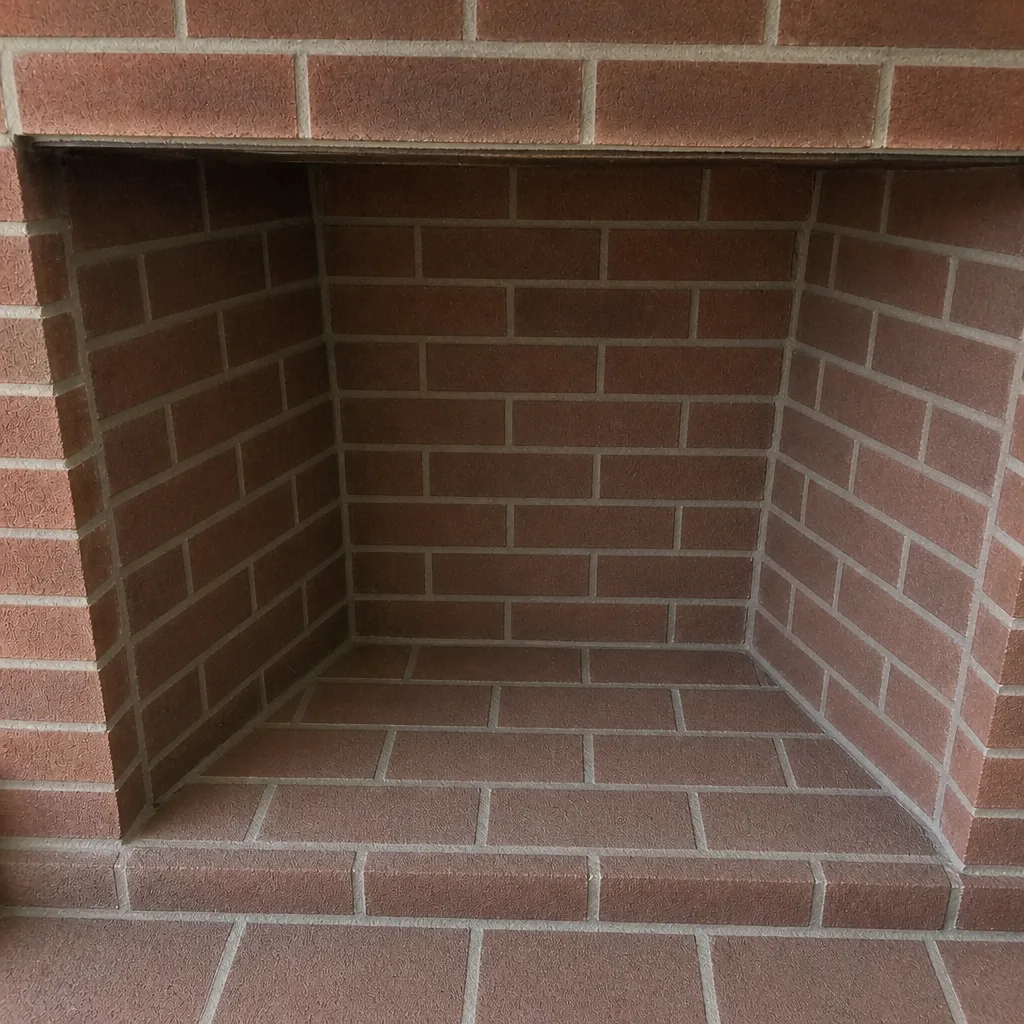
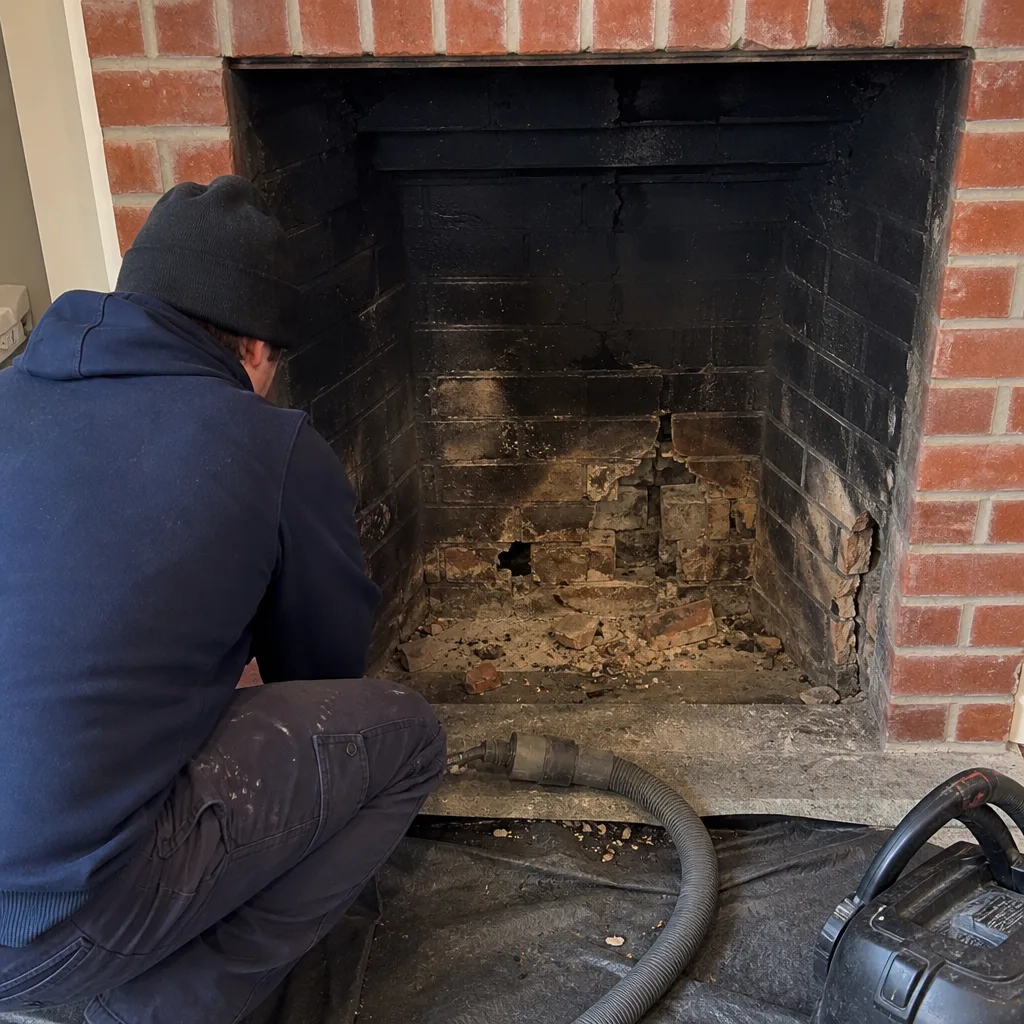
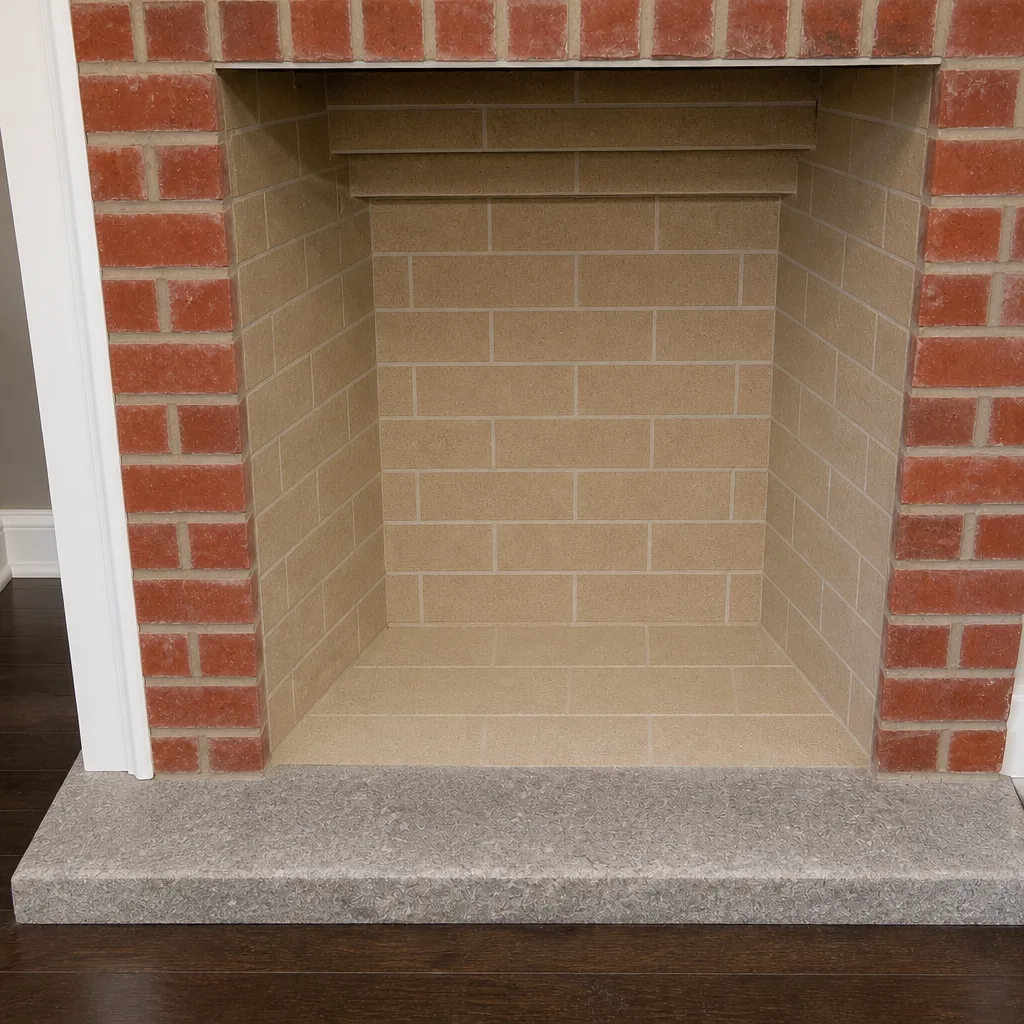
See the difference
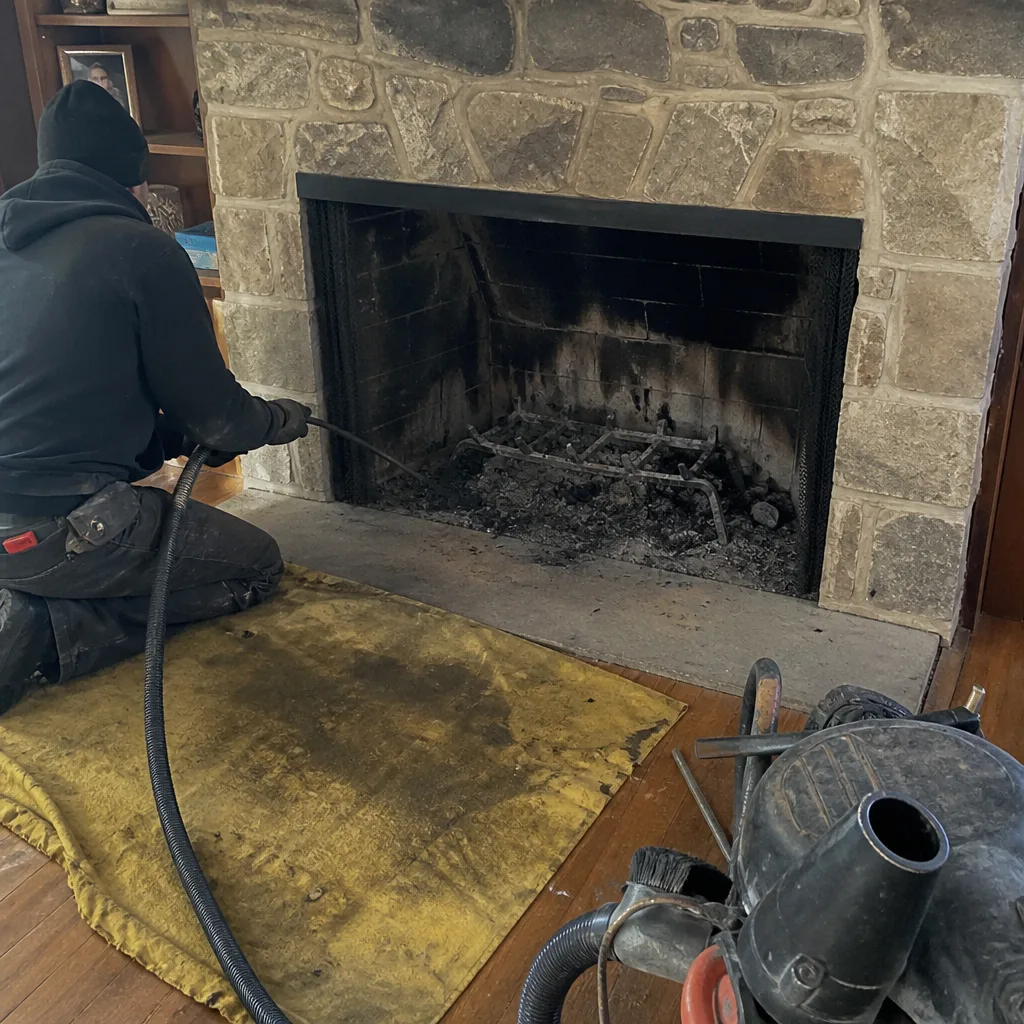 Before
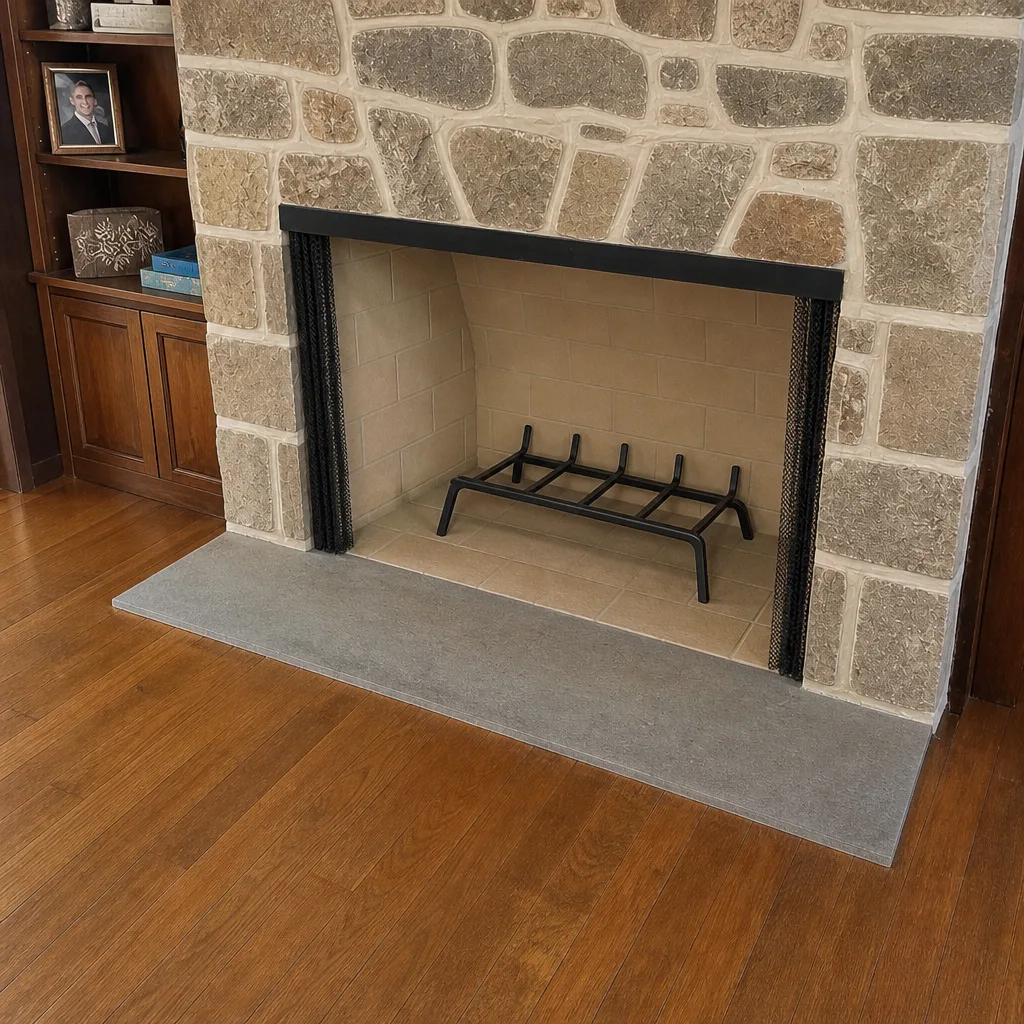 After
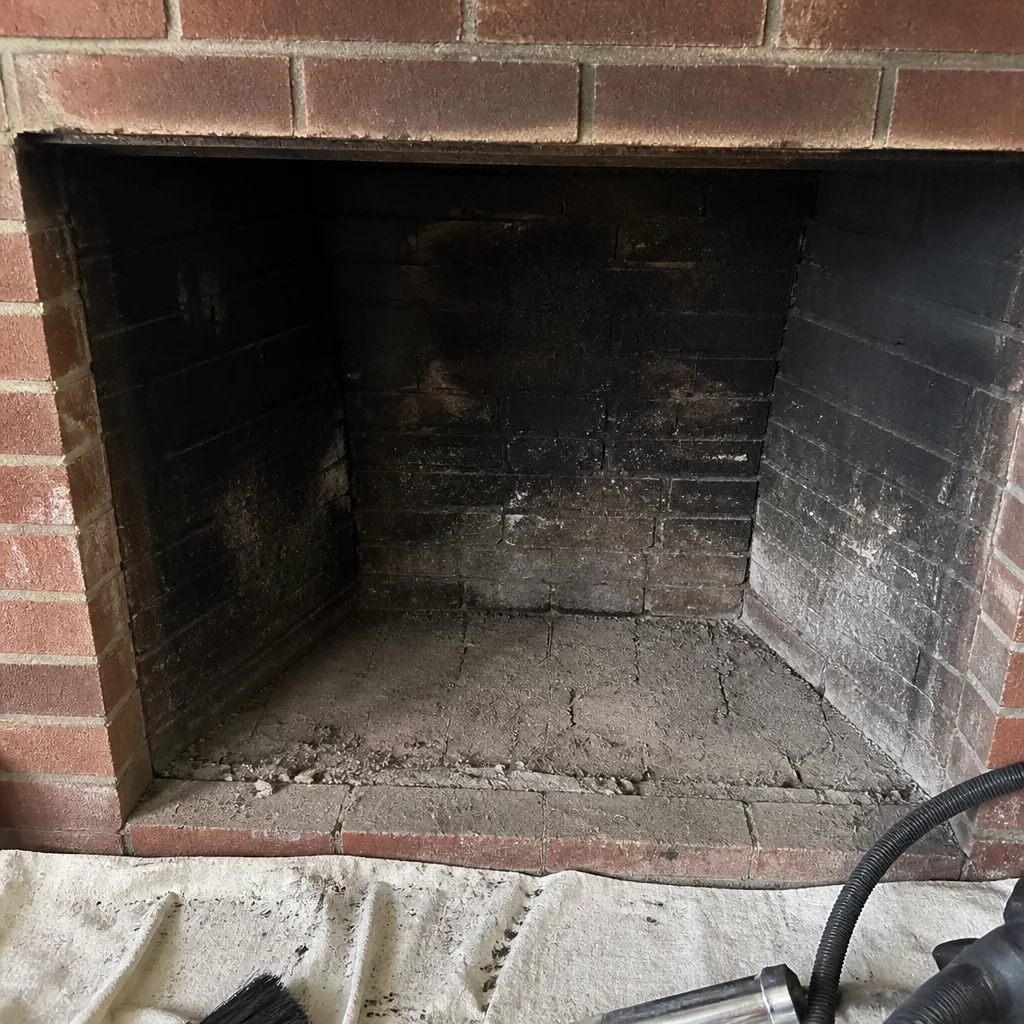 Before
 After
 Before
 After
When to Call a Professional
Call a professional if smoke backs into the room during a steady burn, if the fireplace smells strongly when it’s off, if you see white staining or crumbling mortar on the outside, if any crack is widening or misaligned, if the damper won’t seat properly, or if you’ve heard or suspect a chimney fire. Also call if you’ve moved into a home with a fireplace you’ve never used, or if an inspector has told you about a liner issue. Chimney work and relining aren’t do-it-yourself territory; the flue is a confined space and a fire hazard, and getting it wrong risks a fire inside the structure. If the flue needs work, the answer is a proper liner system installed by a specialist, not a tube of sealant.
Chimney Sweep St. Albans offers free estimates in St. Albans – call (833) 468-5934. Chimney work is all we do, and we name the materials we use before the job starts, so you know what’s going into the flue.
Frequently Asked Questions
A chimney should be swept when the flue accumulates buildup, and once a year even if you burn occasionally. Homeowners who heat with wood heavily may need more frequent cleaning, and oil or gas flues need inspecting and servicing on the appliance manufacturer’s schedule. The annual inspection matters as much as the sweep, because it catches liner and cap problems before they become structural. Call (833) 468-5934 for an exact quote – estimates are free.
Buildup keeps accumulating and the fire risk rises with it, and small problems like a cracked crown or a compromised liner stay hidden. A blocked or damaged flue can push smoke and carbon monoxide back into the living space. Skipping maintenance doesn’t cause a fire every time, but it removes the warning system that tells you when one is likely. If the last clean has no clear date, book an inspection. Call (833) 468-5934 for an exact quote – estimates are free.
A chimney fire usually sounds like a deep roar or rumble, often described as a freight train, and may come with popping or visible flame at the top. A normal fire crackles and burns within the firebox and makes no roaring sound in the flue. If you hear one, get everyone out and call the fire department, then book an inspection. Call (833) 468-5934 for an exact quote – estimates are free.
A creosote or soot smell from an idle fireplace usually means cold air is coming down the flue and carrying the smell with it. A persistent sulfur or oil smell points to a combustion byproduct and a liner problem, and means the appliance should be checked before further use. Either way, the fix starts with an inspection. Call (833) 468-5934 for an exact quote – estimates are free.
A sweep in the St. Albans area is priced per job on a written estimate, so the number depends on the flue, how much buildup there is, and what the inspection finds. Getting the estimate written down before the work is booked, with the scope stated, is the way to compare quotes fairly. Call (833) 468-5934 for an exact quote – estimates are free.
A new liner is required when the existing flue is cracked, misaligned, corroded, or otherwise no longer holds combustion products inside. That’s a job for a proper liner system, not a patch. Whether yours has reached that point is a question for the inspection, not the sales pitch. Call (833) 468-5934 for an exact quote – estimates are free.
A little white staining is a problem worth catching early, because it’s efflorescence and it means water is moving through the masonry. The amount to worry about is any amount; the sooner the water path is found and closed, the less masonry has to be repaired. A cap and crown check is where we start. Call (833) 468-5934 for an exact quote – estimates are free.
No, not until the flue has been inspected and cleared by a professional. A chimney fire can crack flue tiles or distort a metal liner without any visible sign from the firebox, and those cracks let heat and gases into the structure. Waiting is the right call. Call (833) 468-5934 for an exact quote – estimates are free.
The Bottom Line
The signs in this guide aren’t random symptoms; each one maps to a specific mechanism inside your chimney. Wet wood and cool flues build creosote; negative pressure and blockages cause backdrafts; a failed cap or crown lets water in, which shows as efflorescence and later as spalling; and a stuck damper wastes heat while hiding water damage above it. A roaring sound means a fire in the flue, and the first 60 seconds are about getting out. The one thing that ties all of it together is the inspection: it’s what turns a warning sign into a diagnosis, and it’s what lets you decide whether the repair can safely wait.
We’re chimney-only specialists, so the same team that inspects your flue can book the sweeping, cap and crown work, relining, and repair rather than handing you to a second contractor. If something you read here sounds familiar, get it looked at rather than lighting another fire. Call (833) 468-5934 for a free estimate. We answer 24/7. Fast dispatch from 7am to 7pm, Sunday through Friday. Our technicians have up to 11 years of experience, and we’ll tell you plainly when a repair can wait.
Written by the team at Chimney Sweep St. Albans.