
Top Signs You Need Chimney Cleaning Service – Don’t Ignore These
Creosote doesn’t announce itself with a warning light. It builds in silence across dozens of fires until the deposit is thick enough to ignite at 1,000°F, and by the time most homeowners notice something wrong, the sign is smoke rolling into the living room. The useful warnings arrive earlier: a smell on a damp day, a fire that’s slow to catch, a pale stain on the chimney face. Here’s the direct answer: call for a cleaning when you spot a faint oily odor, lazy smoke, a startup lag, crusty flue walls, or animal debris at the firebox. If you’d rather not climb a roof to check, call (833) 468-5934 and we’ll take a look.
Why the Obvious Signs Come Too Late
Most “warning signs” lists hand you the same five red flags: smoke, soot, a smell, a stain, a sound. Those work. But every one of them fires after the problem has already been developing, often for months. In our experience, the intermediate signals are the ones worth learning, because catching a problem in the $200 cleaning range is a very different conversation from a $3,000 liner repair.
Think of it this way. Your chimney is a passive system that talks constantly through draft, smell, smoke behavior and the surface of the flue. None of that requires tools. It requires knowing what you’re looking at.
The Smell Test Most Homeowners Misread
A faint oily or asphalt-like odor on humid days is the single most-missed intermediate sign of creosote buildup. That smell isn’t “just fireplace smell.” It’s the signature of Stage 2 or Stage 3 creosote, and it tells you the deposit has moved past the powdery, sweepable stage into something that needs a trained sweep.
Here’s what the difference looks like on the flue wall:
- Stage 1: Soot and flaky powder you could brush off with a stiff broom. Sweepable. Low risk.
- Stage 2: A crusty, hardened layer of black or dark-brown deposits that clings to the flue wall. This is where the smell starts. It’s also where many homeowners can’t tell it’s a problem by looking at the firebox alone – the deposits are higher up.
- Stage 3: A thick, glazed, tar-like coating that looks almost like a candle has melted onto the flue. This is the dangerous one. It’s high-fuel and doesn’t brush off cleanly.
If a St. Albans homeowner catches that smell and tells us about it, we know before we arrive that this isn’t a ten-minute job. That’s useful information. It shapes the tools we bring and the estimate we give.
Smoke Behavior Is a Diagnostic Tool
Watch how your smoke moves. It’s telling you which problem you have. There are three distinct patterns worth knowing:
- Lazy, drifting smoke that barely rises. This usually points to a partial blockage – a bird’s nest, a fallen cap, or significant glaze buildup narrowing the flue. The chimney can move some gas, just not enough.
- Smoke rolling out of the firebox opening. Rollout at the opening typically means restriction higher up, or a failed damper that never opened fully. It’s a draft problem, not a fire problem.
- Smoke that only backs up sometimes. This intermittent pattern usually tracks with weather, wind direction, or a cold flue. If it happens mostly on cold starts, that’s different from backup during a fire – and worth telling us about when you call.
Homeowners in St. Albans who heat with wood in older homes tend to see pattern two first, because the fireplaces were built decades before modern draft expectations. Pattern one shows up more on gas and oil flues with degraded liners. Either way, the diagnostic value is real. A chimney that drafts correctly is a chimney that’s clear.
The White Stain on Your Chimney Face
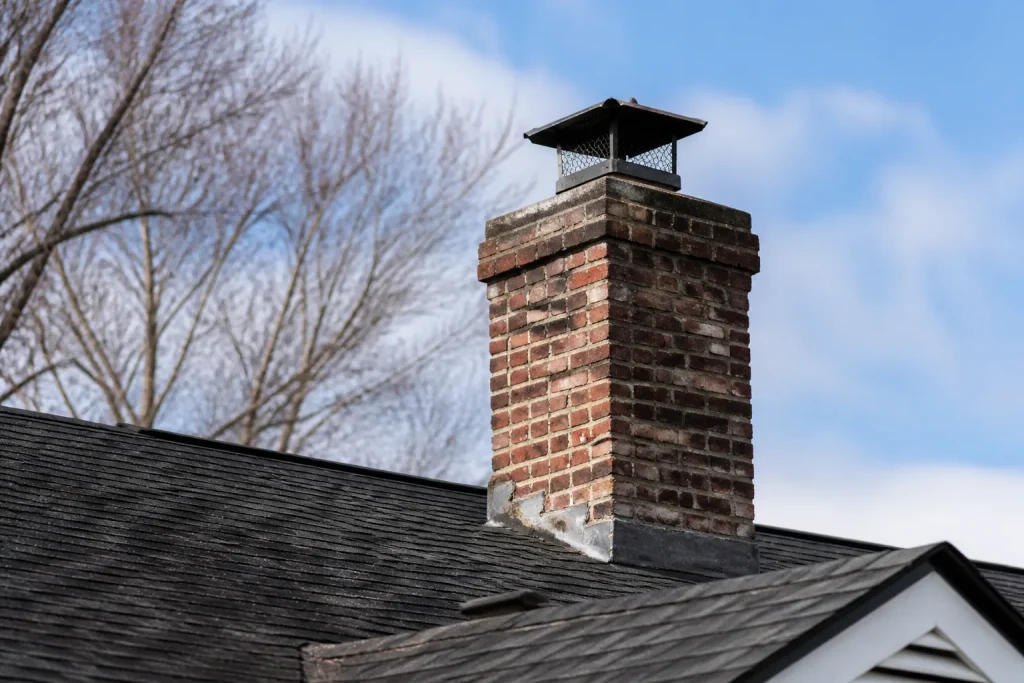
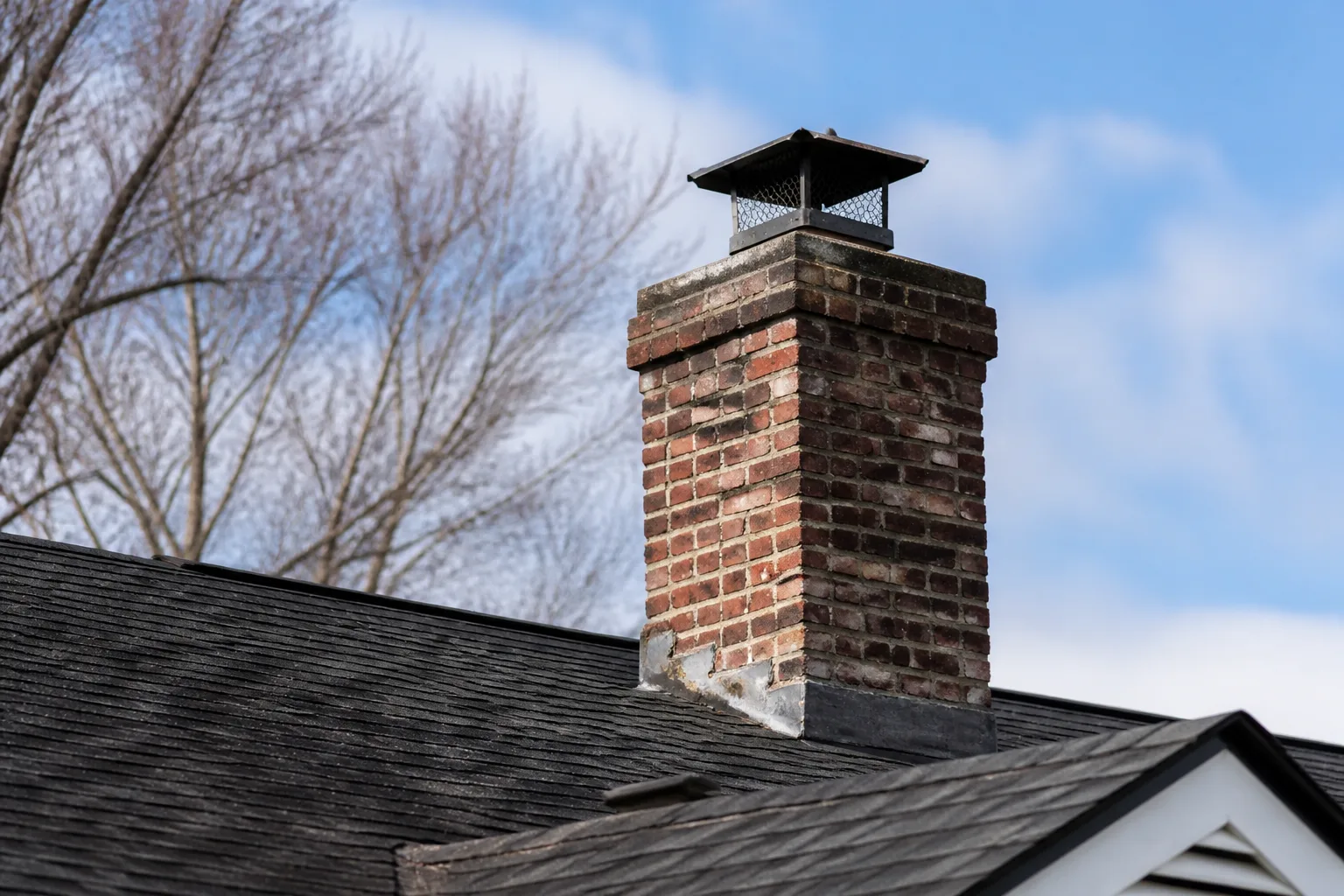
A chalky white deposit on the exterior face of your chimney is called efflorescence. It’s not cosmetic. It’s the visible signature of moisture moving through masonry and pulling mineral salts to the surface as it evaporates.
Left alone, that cycle is expensive. Each freeze-thaw season pushes a little more of the mortar loose and widens the cracks where water enters. Homeowners who wait end up paying for a tuckpointing or masonry repair job later that a proper cap and crown would have prevented now. If you’re in St. Albans and see efflorescence, don’t paint over it. Painting traps moisture and accelerates the damage. Have the chimney inspected to find where water is getting in, and look at chimney cap & crown work as the fix. A well-fitted cap and a sound crown keep most of this problem from starting.
The Startup Lag Test
Here’s a test you can run tonight. Build a fire with one sheet of newspaper and see how it goes.
A healthy flue should establish draft before the second sheet burns down. If your fire needs more than two sheets of newspaper, or if you find yourself opening the damper wider and wider just to keep smoke going up, you probably have a partial restriction or significant glaze buildup in the flue.
The lag happens because the flue can’t pull air efficiently. It’s not the wood’s fault (unless the wood is green), and it’s not the fire you built. It’s the pathway. In every St. Albans sweep we run, if we hear about a startup lag on the phone, we’re already thinking about what we’ll find with a camera. If the flue looks fine and the lag is just cold-weather backdraft, that’s good news – you’ll know it, and we’ll tell you plainly when work can safely wait.
Animal Debris at the Firebox Floor
“I hear scratching sounds” is the beginner signal. Here’s the intermediate version: the debris at the firebox floor identifies the intruder and the entry point.
- Twigs and grass clippings: birds. The nest is usually sitting on a damaged or missing crown, or in the flue just below the top of the chimney. The cleaning scope includes removing the nest and finding the gap the bird used.
- Chewed insulation or shredded paper: squirrels or mice. These typically come in via a missing cap or a gap in the flue tile. The fix isn’t just cleaning – it’s a new cap.
- Small droppings and a musky odor: bats or raccoons. Bats are a protected species in many states, so this one calls for a licensed wildlife removal first and then a cap secured afterward, not a quick brush-out.
Sweeping a flue that still has an entrance route is wasted work. When we find animal debris in St. Albans chimneys, we always look at the cap solution in the same visit. That’s what “one crew, start to finish” means in practice. We use chimney cap & crown work to close the gap and chimney sweep work to clear what’s already inside. Different problem, different tool, same visit.
What Signals a Liner Problem Rather Than Just a Dirty Flue
Creosote is one thing. A compromised liner is another. They’re often confused, and the repair cost difference is significant.
Signs that point to the liner and not just buildup:
- Dark staining on the chimney’s exterior face, especially near the top – that’s moisture and combustion byproducts getting through where they shouldn’t.
- Crumbling material at the firebox opening or flue tile joints when you look up with a flashlight.
- A smell that persists even after a professional cleaning, suggesting the deposit has moved into the liner material itself.
- A fire that drafts well but still smokes, or smokes worse after a cleaning than it did before.
If a liner is compromised, we typically recommend a HeatShield relining or a DuraFlex flexible liner system. These are manufacturer-backed solutions built for long-term flue protection, not improvised patches. They’re also why we name the materials we use – you can ask what’s going into your flue and get a specific answer, not a shrug.
When to Call a Pro
Some of this you can check yourself: the newspaper test, the smell on a humid day, the white stains, the smoke pattern, the debris at the firebox. All observation. Once the flue itself needs inspecting, though, that’s when observation stops being enough. Camera inspection, flue cleaning, liner assessment and the chimney repair work all need a trained eye, and going up a roof with a brush is a job for someone with the right tools and a reason to be careful.
Nothing should be recommended to you without camera evidence you can see for yourself. That’s the standard we hold to. A photo report goes with every inspection so you’re not taking our word for what’s happening in your flue.
Related services in St. Albans: chimney sweep, chimney repair, and chimney cap & crown work. All five service categories – sweep, cap and crown, repair, inspection and fireplace repair – are handled by the same specialist team. Chimney work is all we do.
The Bottom Line
Your chimney tells you what’s happening long before it fails, as long as you know what to watch for. The intermediate signs – that faint oily smell on a humid day, the startup lag, lazy smoke, the white stain on the brick, the debris type at the firebox – arrive weeks or months ahead of the obvious red flags. Catching them in the $200 cleaning range is the entire point. Ignoring them gets expensive.
If you’re in St. Albans and want a trained eye on your chimney, Chimney Sweep St. Albans offers free estimates – call (833) 468-5934. Our technicians have up to 11 years of experience. We answer 24/7. Fast dispatch from 7am to 7pm.
If you’re wondering what the difference between us and a generalist is, it’s simple. A plumber who added sweeps will tell you what you need. We’ll show you the camera photos and name the exact product going into your flue. Ask us what’s going into your flue.
Frequently Asked Questions
Once a year for most homes, and more often if you burn wood heavily or notice any of the intermediate signs above. Industry guidelines recommend annual inspection and cleaning based on use. If you’ve just moved into a home in St. Albans, book an inspection even if the previous owner said it was recently done. Call (833) 468-5934 for a free estimate and we’ll tell you exactly what’s needed.
If the smell is oily or asphalt-like and shows up on humid days, yes. That’s the signature of Stage 2 or Stage 3 creosote, and it warrants a professional sweep. A dry, smoky “fireplace smell” after a fire is normal. An oily smell days later isn’t. Call (833) 468-5934 and we’ll ask a few questions to help you tell the difference.
Sometimes, yes. If the signs are only the newspaper test and a light smell, and you’re near the end of burning season, we can look and tell you plainly if waiting is safe. If you have white stains, lazy smoke, or shimmering on the flue wall (never check that yourself, have it looked at), don’t wait. Call (833) 468-5934 for a free estimate and we’ll give you a straight answer.
The creosote deposit keeps thickening. Stage 2 turns into Stage 3 glaze, which ignites at very high temperatures, and that’s how chimney fires start. Carbon monoxide can also back up into the home if the flue becomes restricted. These are real risks, not scare tactics – and they’re the reason annual maintenance matters. Call (833) 468-5934 to book an inspection before the next burning season.
Written by the team at Chimney Sweep St. Albans.
Need Chimney Cleaning Help?
Call Chimney Sweep St. Albans - the local pro we connect you with is licensed and insured, with free written estimates in St. Albans.
(833) 468-5934