
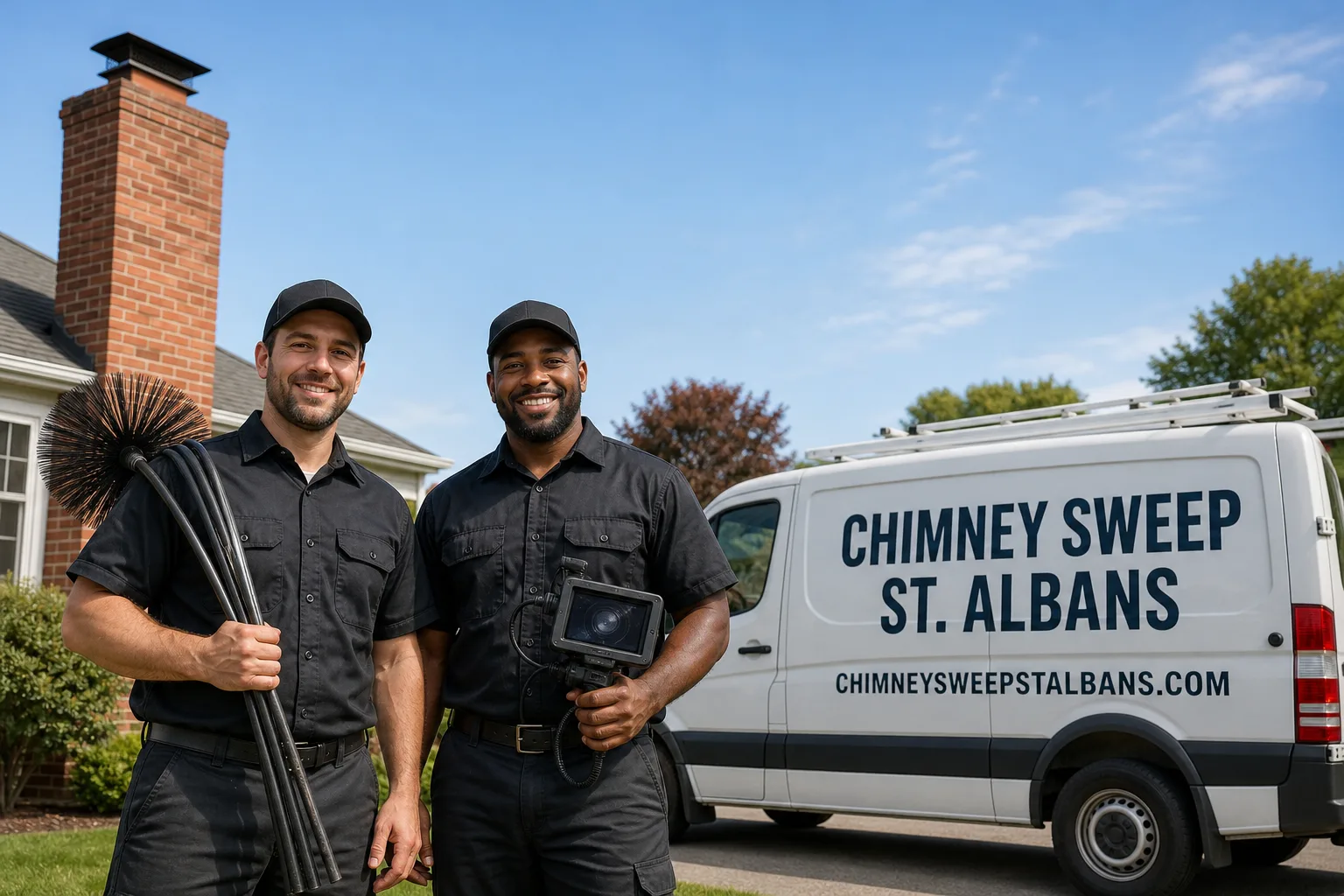
 Sweep & inspection
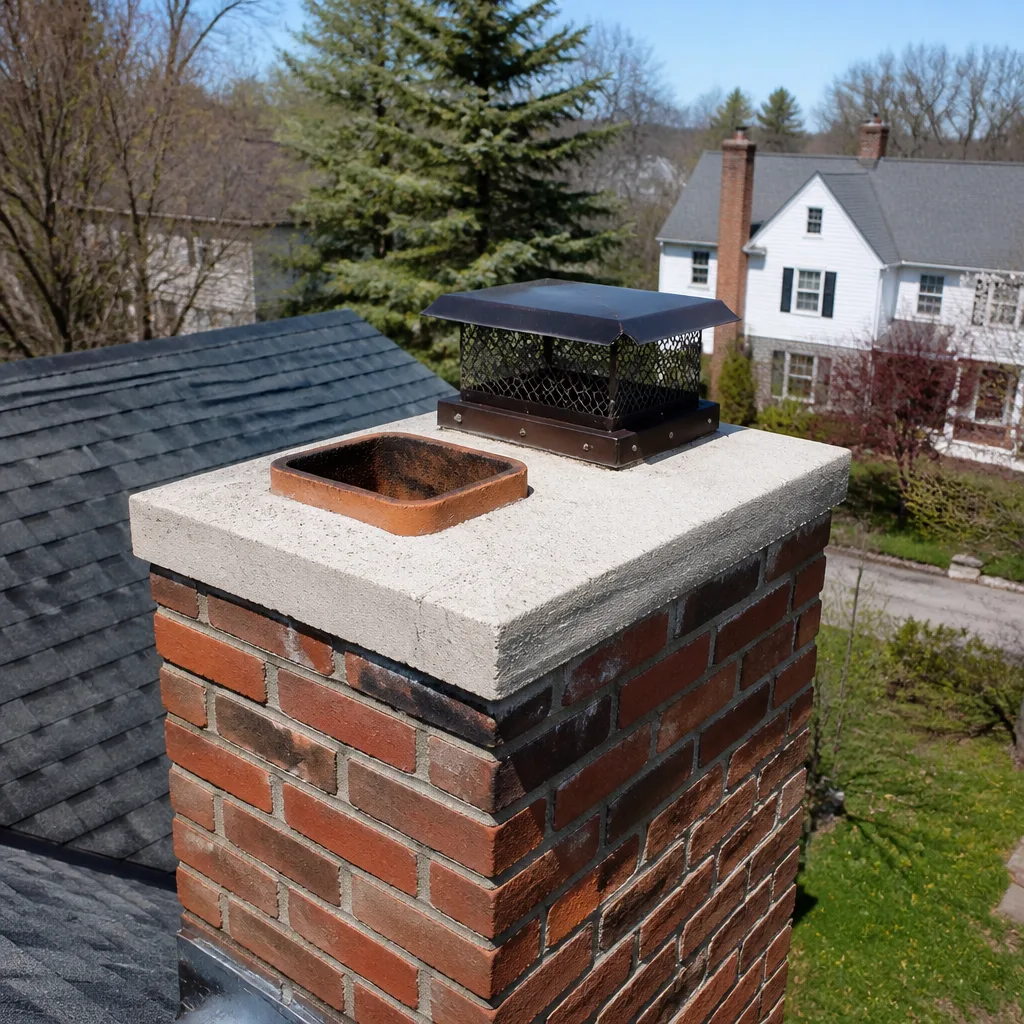
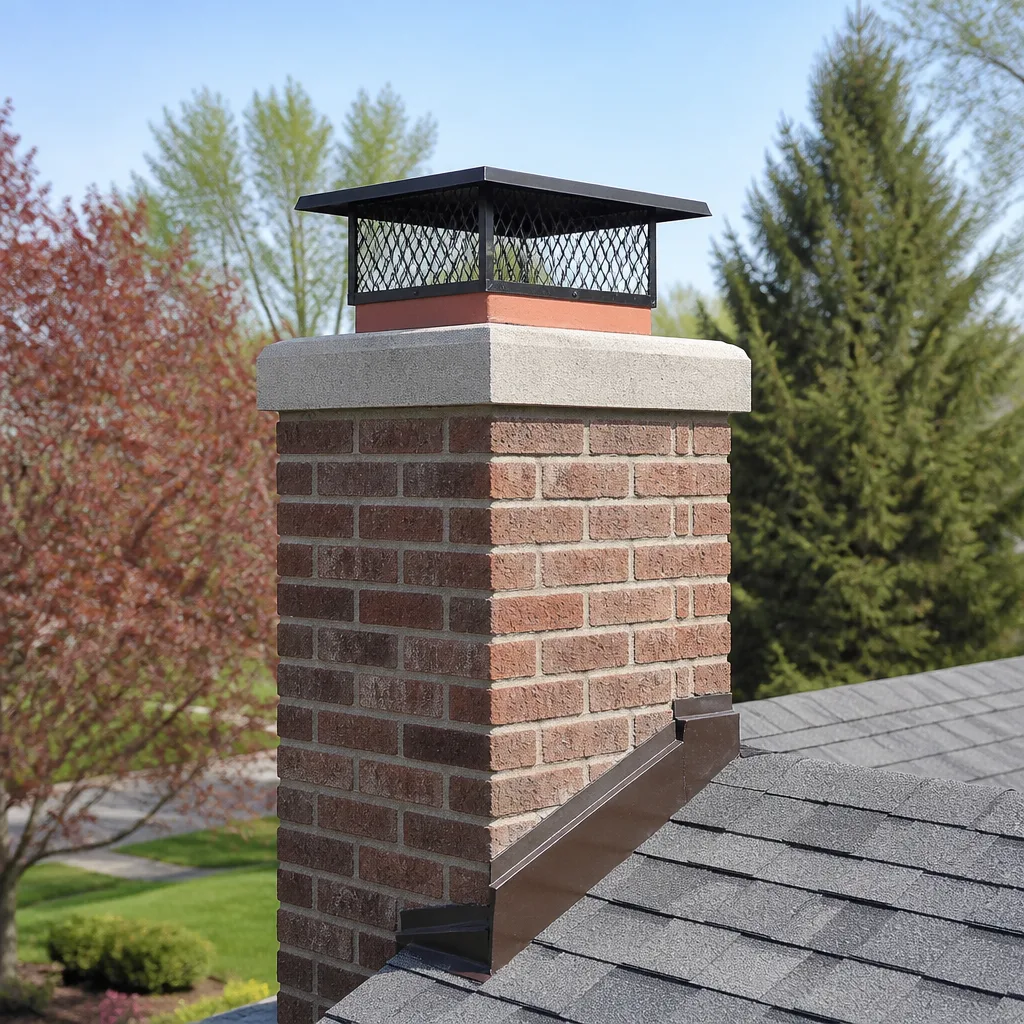 Caps & crowns
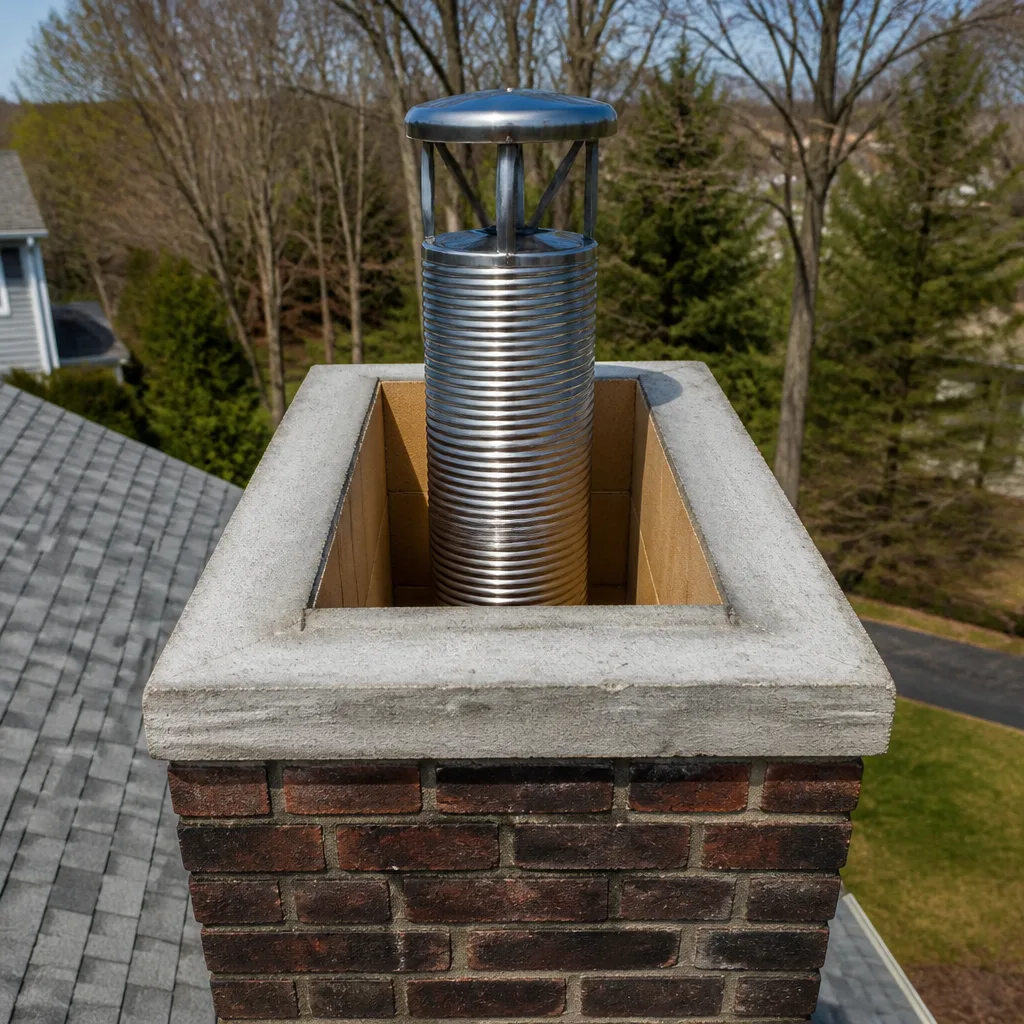 Flue relining
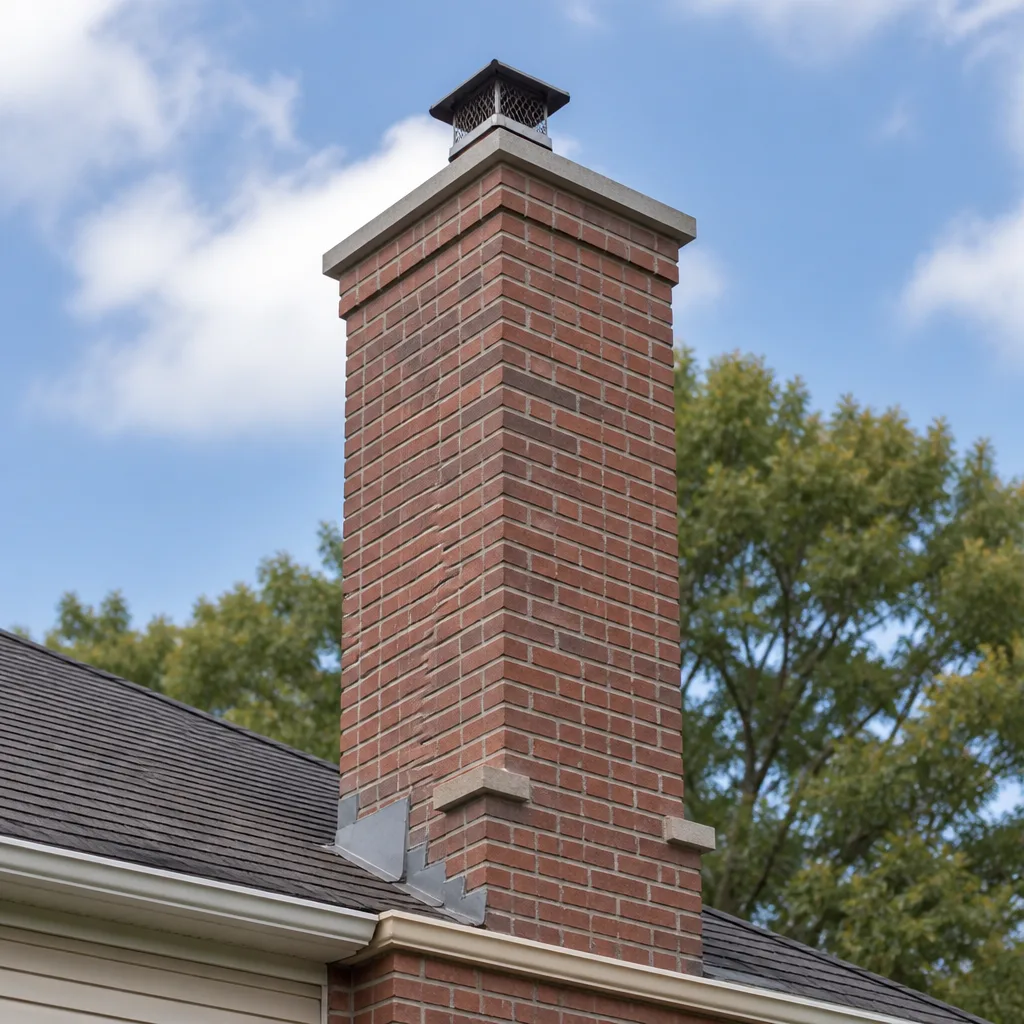 Masonry repair
 Gas fireplace service
Level 1 sweep and inspection to the NFPA 211 annual standard - flue, crown, cap, and flashing checked and photographed
Chimney sweep logs do not sweep chimneys. They loosen some creosote - which then falls where a brush and vacuum still have to collect it.
Trusted Chimney Repair for St. Albans Homeowners
Crumbling mortar joints, a crown with a hairline crack running through it, or brick faces flaking off after a hard winter: these are the signs that a chimney in St. Albans is telling you it needs attention. A chimney is a structural stack of masonry held together by mortar, and St. Albans housing stock takes a beating from freezing cycles in February and the wet, humid air that settles over the neighborhood all summer. When water gets into brick and mortar, it expands on the next freeze and the damage accelerates. Our technicians have up to 11 years of experience, and we name the materials we use on every job. Same-day booking is often available. Call (833) 468-5934 for a free estimate.
Chimney work is all we do. We don’t split our crews between plumbing and chimneys, so the person who inspects your flue is the same person who diagnoses the repair and the same one who does it. One crew, start to finish. We build our repairs around recognized industry brands like HeatShield and DuraFlex because those systems are designed for long-term flue protection, not a cosmetic patch. When we look at a chimney in St. Albans, we’re looking for the problem beneath the problem: the water that cracked the brick, the rusted flashing that let it in, the liner that lost its seal when the mortar moved. Fixing only the visible symptom is how a chimney repair gets done twice.
Start with a free estimate. We’ll tell you what’s wrong, what we’d do about it, and what it will cost in writing before anyone picks up a trowel.
What Our Chimney Repair Service Includes
Chimney repair covers six distinct kinds of work on a St. Albans chimney, and they often overlap. A deteriorating crown lets water into the masonry, which causes spalling, which loosens the mortar joints, which allows the flashing seam to open. We look at all six together because repairing one in isolation usually leaves the next problem to develop.
Mortar Repointing
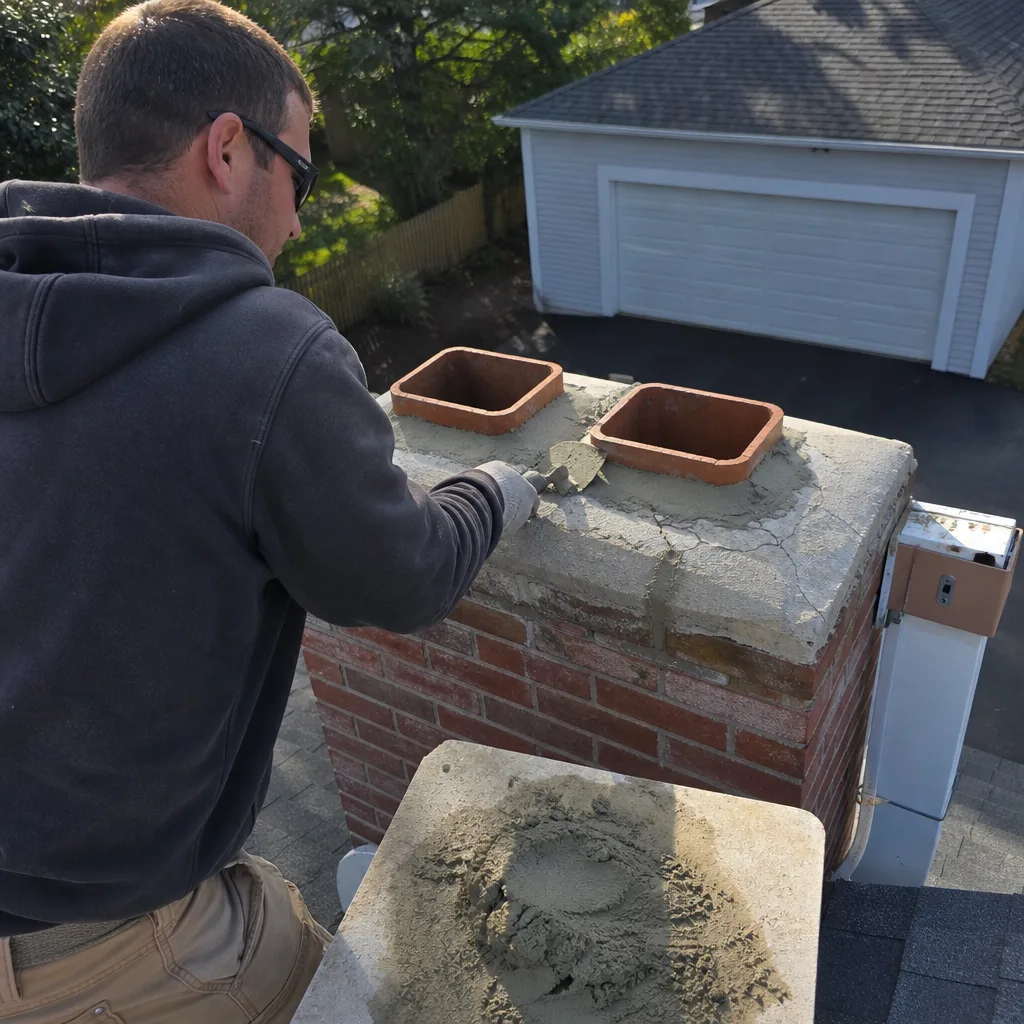
Repointing is scraping out the old, degraded mortar between bricks and packing in fresh mortar that bonds tightly to both sides. You need it when the mortar crumbles to powder under light finger pressure or you can see recessed, shadowed joints where the mortar has washed out ahead of the brick face. We do it with a finger-joint tool and fresh mortar mixed to match the existing color, because a repoint that doesn’t match the surrounding masonry looks like a repair and that becomes a resale problem.
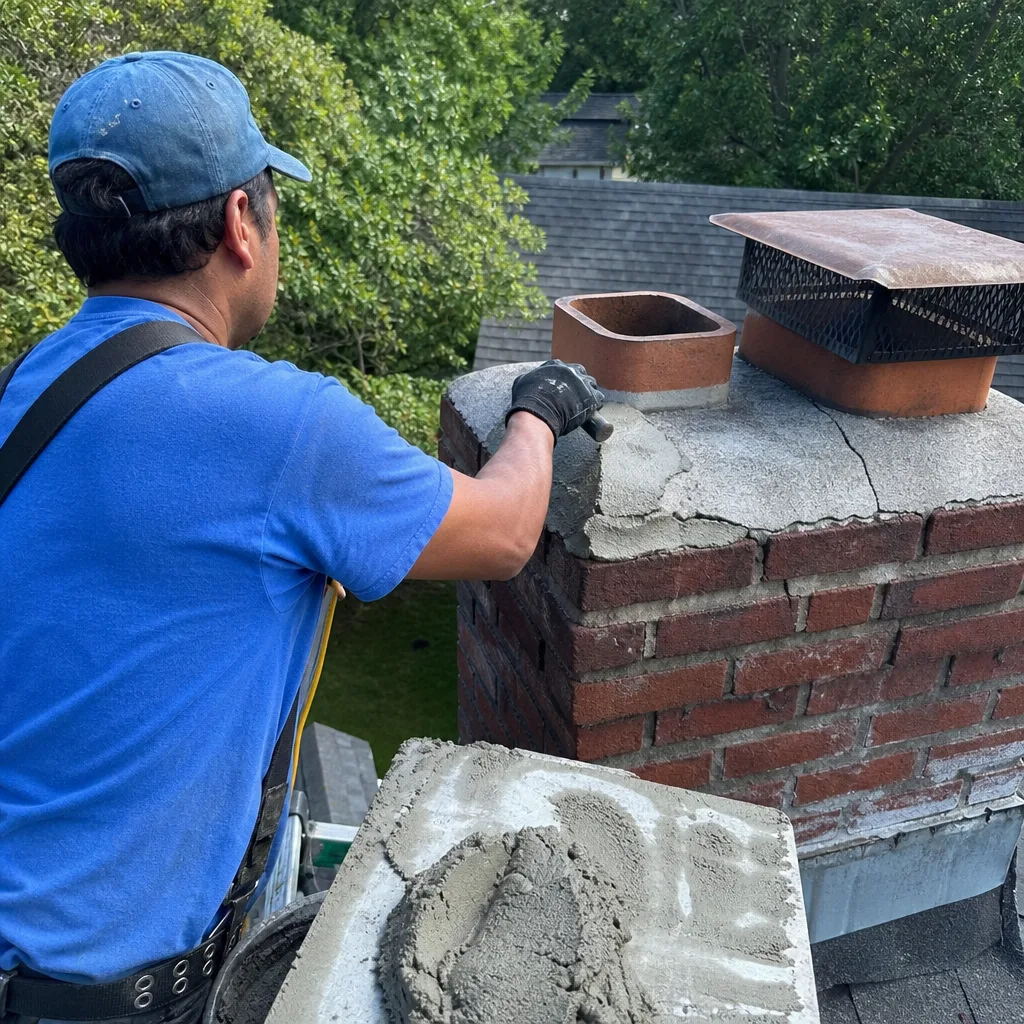
Spalling Brick Repair
Spalling is the flaking or popping-off of the brick face, usually the result of water absorbed into the brick freezing and pushing the outer layer away. It’s common on the sunny side of a chimney where the brick was wet from a crack above it. We replace spalled brick with compatible units and address the moisture source before we do it, because setting new brick into a chimney that still leaks just delays the same failure. Left long enough, spalling hollows out the brick and the chimney loses real structural mass.
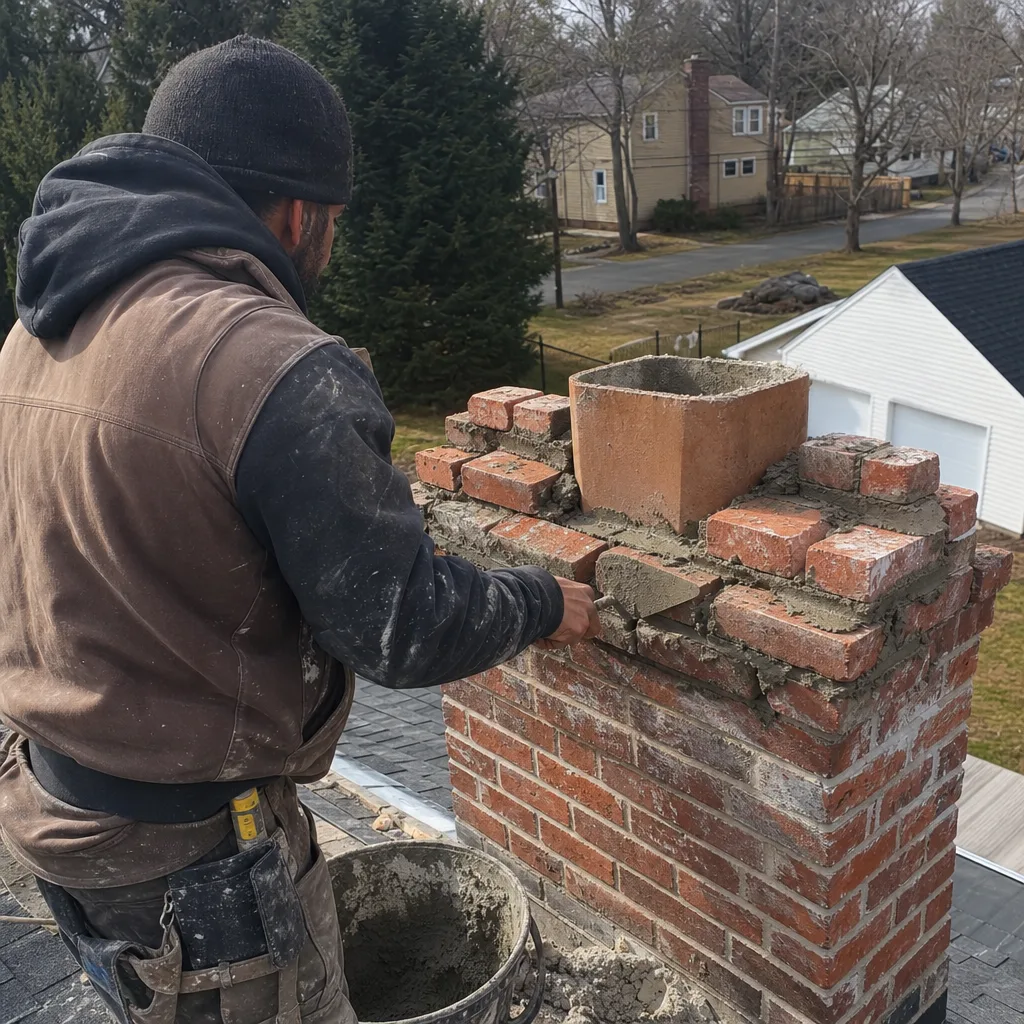
Chimney Waterproofing
Waterproofing is a vapor-permeable coating applied to the exterior brick and mortar that repels rain while allowing moisture already inside the masonry to escape. It’s the right move after any repair, or when a St. Albans homeowner is dealing with white mineral bloom or recurring water staining on the chimney face. We apply it only after the masonry is clean and dry, which means if there’s active water damage we repair first and waterproof after.
Flashing Repair
Flashing is the metal sheet where the chimney meets the roof, bent into the mortar joints and shingled over at the base to shed water away from the seam. When it rusts through, pulls out of its mortar groove, or was never properly stepped into the shingles, water runs straight down the chimney chase and shows up as a ceiling stain far from the chimney itself. We repair flashing using proper step flashing and counter-flashing, and we coat the seam with a sealant rated for the materials. If you’ve had a ceiling leak you can’t find the source of, check the flashing first.
Chimney Rebuilding
Rebuilding means taking the chimney down to the roofline or below and masonry-rebuilding the upper section that’s beyond repair. It’s the right answer when the chimney is leaning, when a large section of brick has lost its bond, or when an earthquake, windstorm, or long-term water intrusion has moved the whole stack out of plumb. We rebuild using the same brick and mortar profile as the original where possible, and we reinstall the crown and cap as part of the same scope.
Tuckpointing
Tuckpointing is the decorative, finer-finish version of repointing: fresh mortar is worked into wide joints and a contrasting mortar is tooled over it to create a crisp, uniform joint line. It’s used on historic homes or where the masonry is in reasonable shape but visually tired. We recommend tuckpointing when the structural joints are still sound and the issue is appearance, not when the joint is actively failing.
Styles & brands we work with
- Sweep & inspection
- Caps & crowns
- Flue relining
- Masonry repair
- Gas fireplace service
Brands We Service for Chimney Repair
We work with HeatShield and DuraFlex on liner and flue-related repair. HeatShield is a cast-in-place relining system we use when the original clay tile has cracked, separated, or is missing a joint and the chimney can’t hold a full demolish-and-rebuild repair. We know how it behaves when applied in a St. Albans winter, which is relevant because the temperature at the time of installation affects how the material cures. DuraFlex flexible liners are what we reach for when the flue needs a continuous, correctly sized stainless liner run through an older chimney; we know the insulation and connection details that make the difference between a liner that lasts and one that has to be replaced.
We also work with Gelco and Olympia Chimney products where the job calls for them. Gelco is a reliable fit for certain cap and crown configurations, and Olympia Chimney components come into play on cap and crown installs where a stock size doesn’t fit the chimney in front of us. Our point is straightforward: whether you have a HeatShield-relined flue or an older clay-tile chimney with no liner at all, we’ll tell you exactly which products we’d use and why. Ask us what’s going into your flue. You should know.
Signs You Need Chimney Repair Right Now
- Crumbling or missing mortar joints. If you can scrape mortar out with a key, or you can see joints recessed more than a quarter inch, the mortar has deteriorated and the brick above is unsupported by anything but gravity. This is repointing territory before it becomes rebuild territory.
- White staining or dark water streaks on the brick. White efflorescence is salt pushed out of the brick by moisture moving through it; dark streaks are usually algae or soot carried by water on the surface. Both point to water entering the chimney somewhere above, most often the crown or flashing. Waterproofing and a flashing check address it.
- A cracked or tilting chimney crown. The crown is the concrete cap on top of the chimney, and even a hairline crack lets water run into the masonry below. A crown that’s already separated from the brick or visibly tilted needs repair before the next freeze cycle.
- Rust stains or corrosion at the flashing seam. Rust on the flashing, or a ceiling stain on the wall adjacent to the chimney, is water getting past the flashing. Left alone, it rots the roof sheathing and framing around the chimney.
- Loose, spalling, or missing bricks. A brick whose face has flaked off is water-damaged, and a brick that’s come loose completely means the mortar behind it has failed. A chimney with bricks falling is a safety concern for anyone standing near it and needs evaluation before the next windstorm.
Our Chimney Repair Process – Step by Step
- 1
Inspection and diagnosis. We start by getting the full picture: a visual inspection of the chimney exterior, the crown, the flashing and the roofline, plus a look inside the flue. We identify the actual origin of the problem, not just the most visible symptom, because repairing the crown when the flashing is the source just means the water keeps coming in from a different angle.
- 2
Written estimate before any work begins. We put the recommended scope, the materials, and the price in writing. You see exactly what we propose to do, which products we’re using, and what it costs, before anyone starts. If we recommend work that can safely wait, we’ll tell you that too and put it in the estimate as a deferred item.
- 3
Material selection for the repair. This is where a chimney repair is won or lost. We match mortar to the existing brick, select the right HeatShield or DuraFlex system depending on the flue condition, and specify flashing and sealant that withstands the local temperature swings. Ask us what’s going into your flue and we’ll tell you brand, product, and reason.
- 4
The repair itself. Masonry repairs happen from the roof or a ladder setup, working top down so water can’t run through the worksite. We stage the job in the order that makes structural sense: crown and flashing first, then the mortar and brick work, then waterproofing last as the protective finish. There’s no second contractor to coordinate.
- 5
Final check and cleanup. We walk the repaired chimney, confirm the crown has the right pitch away from the flue, and make sure the flashing seam is sealed and the waterproofing is even. We clean up the work area and leave you with a clear record of what was done. If any part of the job isn’t going to hold, we want to know now, not after we’ve left.
See the difference
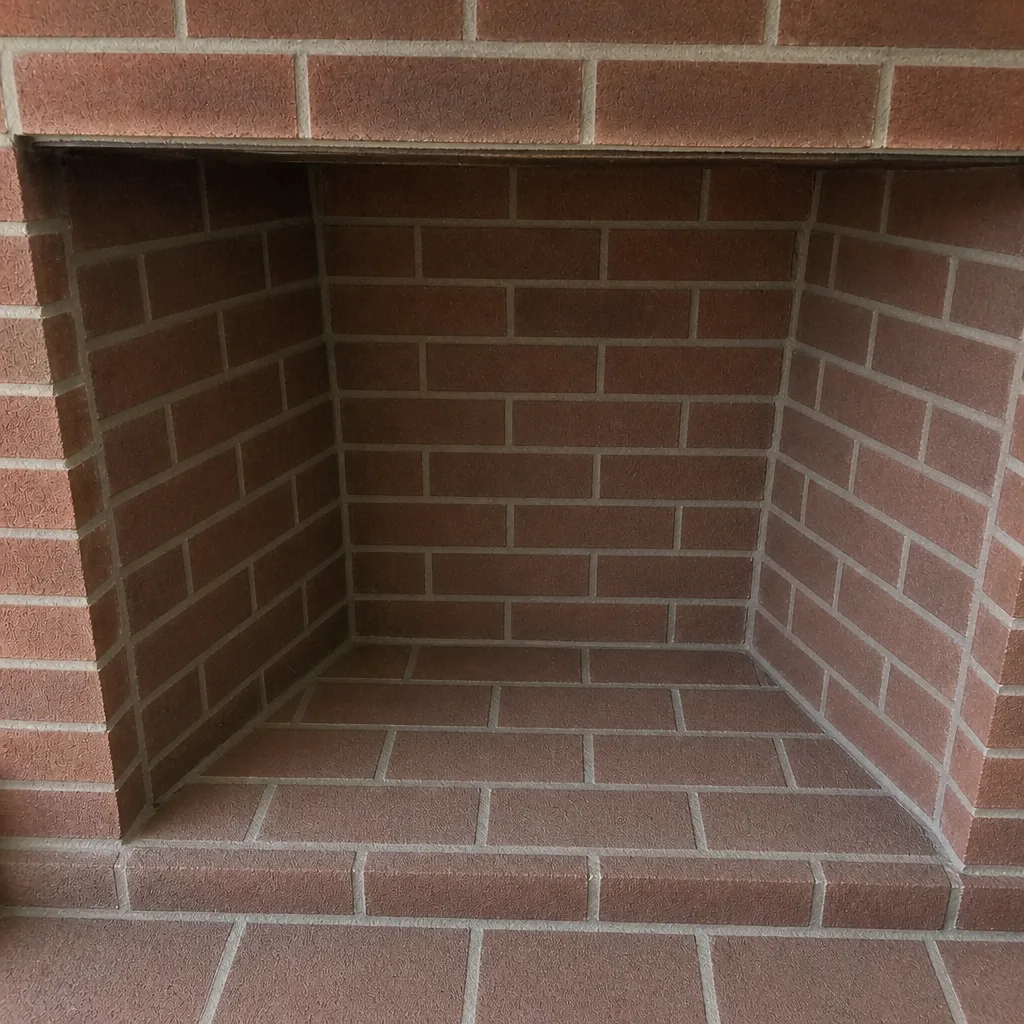
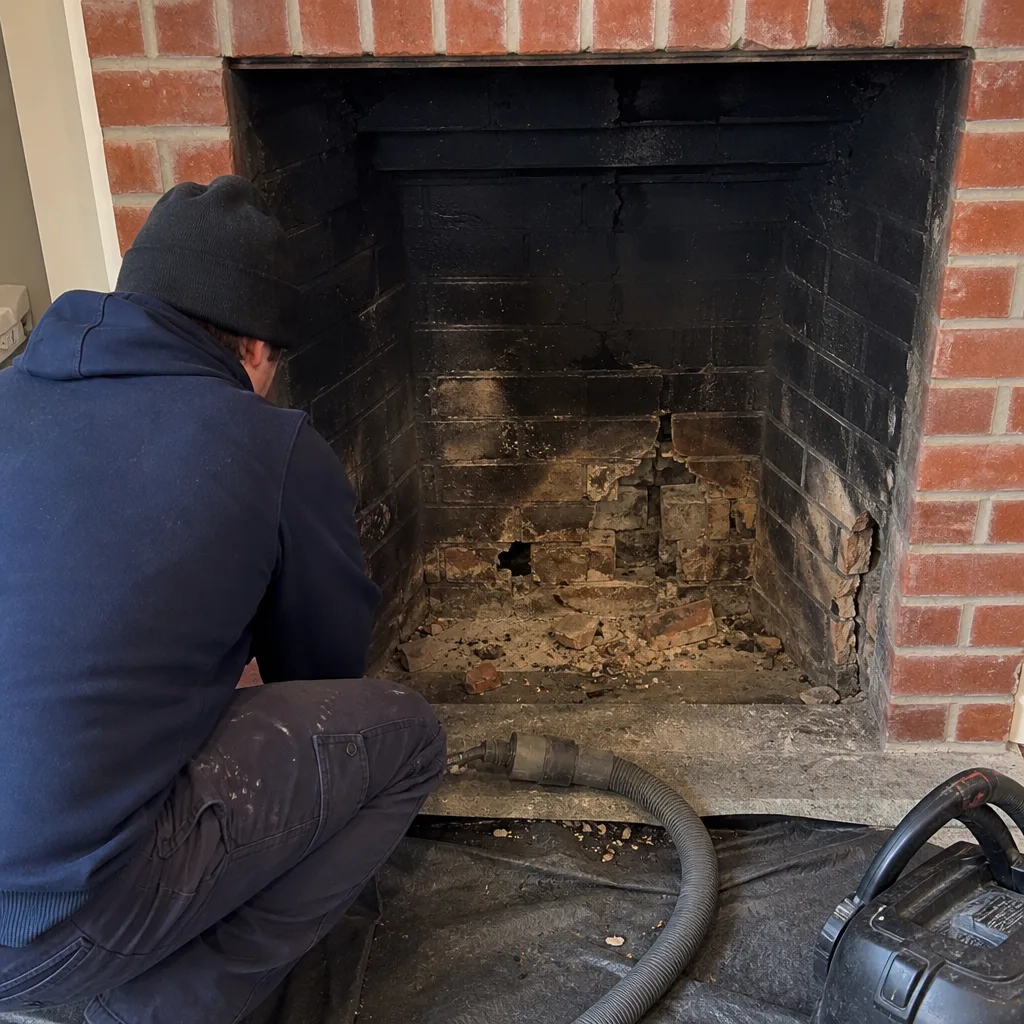
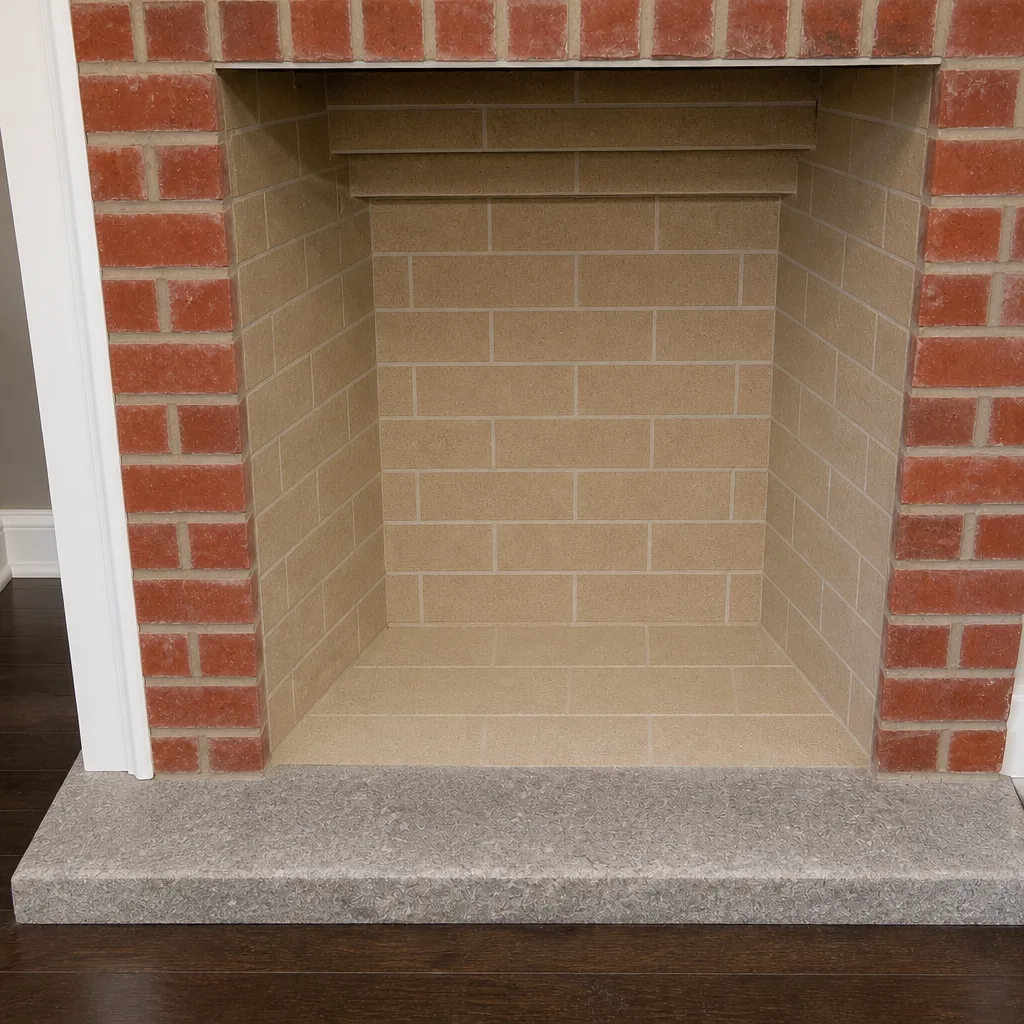
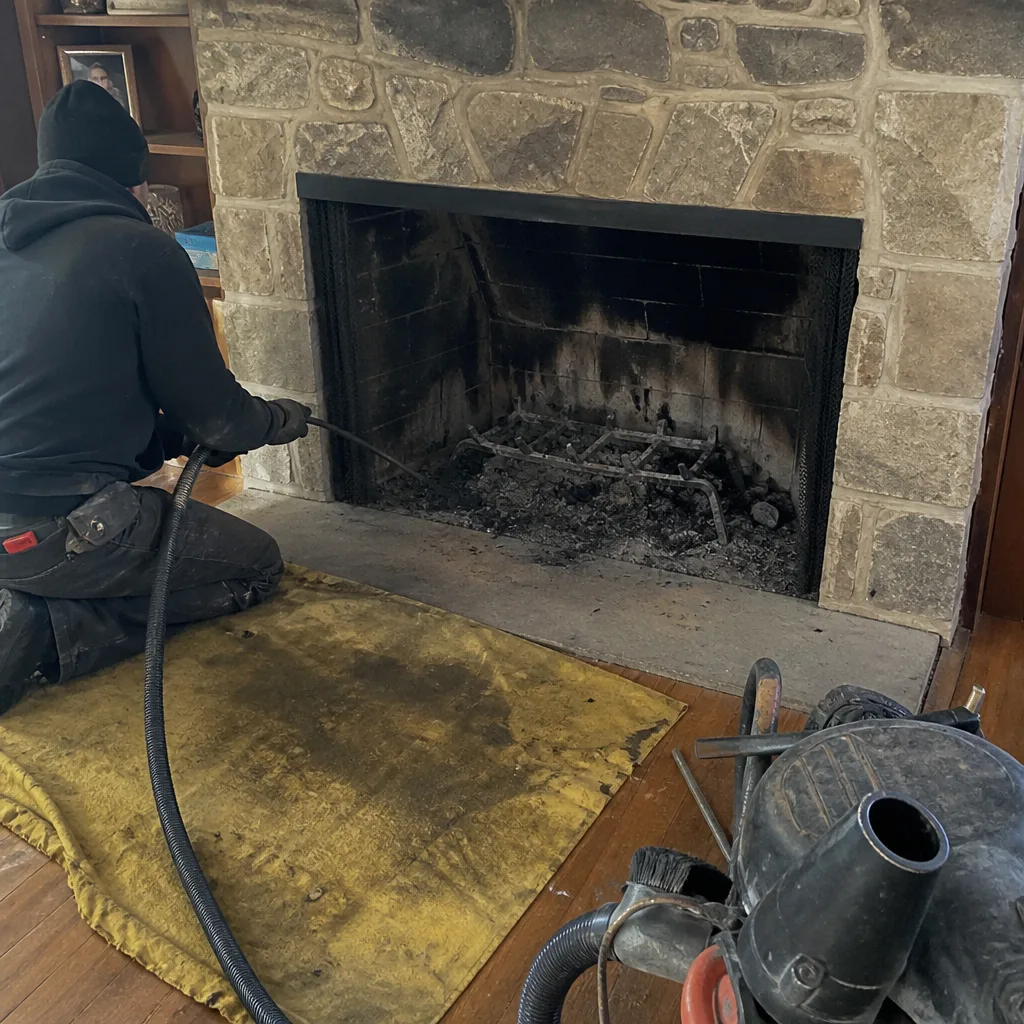 Before
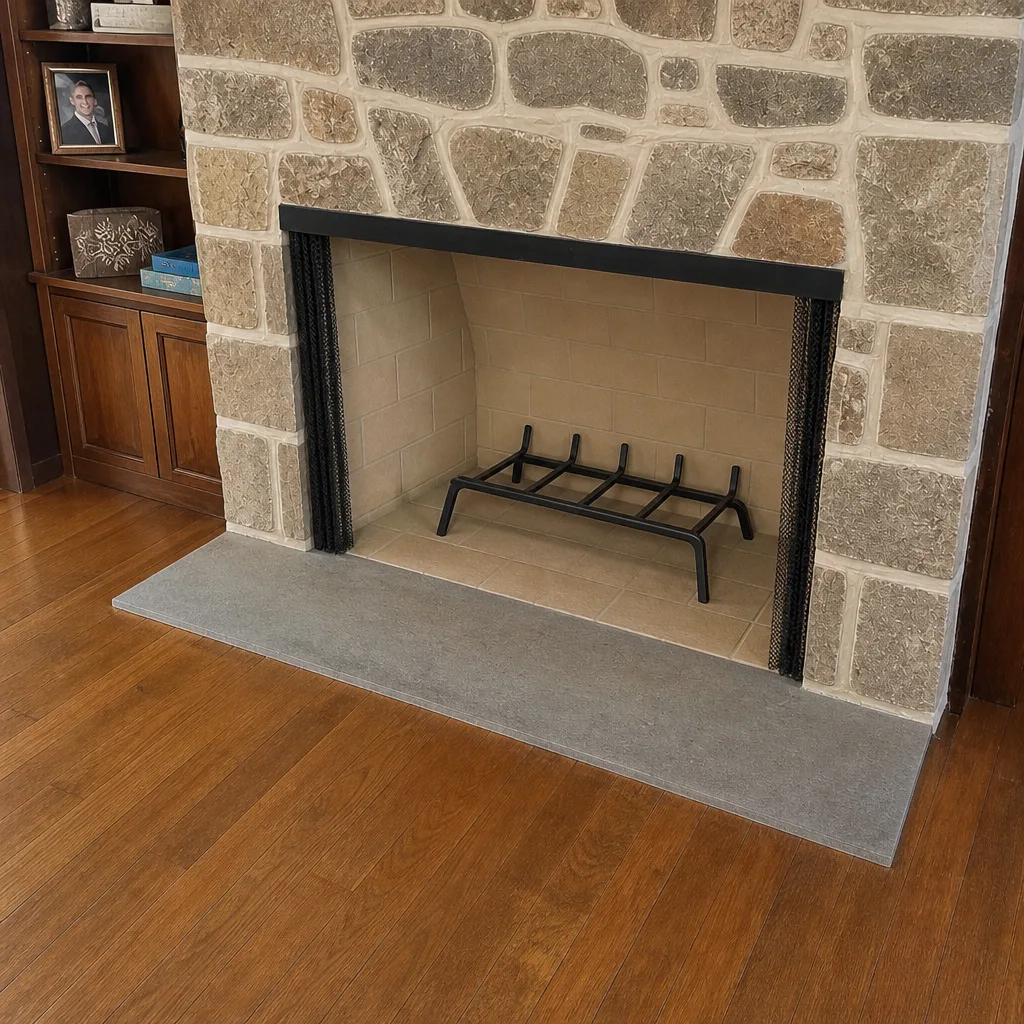 After
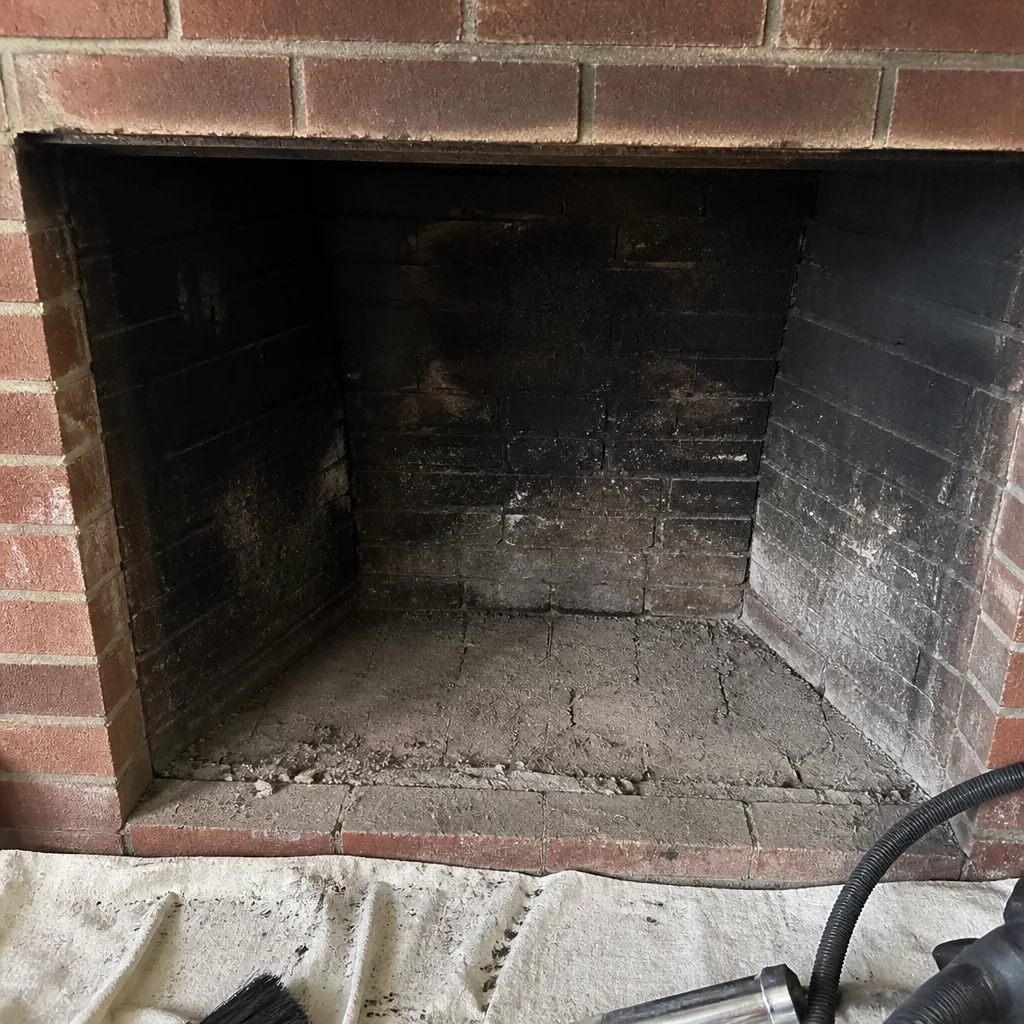 Before
 After
 Before
 After
How Much Does Chimney Repair Cost in St. Albans?
Chimney repair in St. Albans typically runs $350 to $2,000, depending on what’s wrong and how far the damage has gone. Repointing for a typical damaged joint section is usually the least expensive repair. Spalling brick replacement runs higher when several bricks have to be matched and replaced. Flashing repair sits in a moderate range, and a full chimney rebuild of the upper section is the top of the scale. These are real estimates from what we see in the neighborhood, not generic averages pulled from a national pricing table.
Here’s a rough breakdown of the typical line items you’ll see in a St. Albans repair estimate:
| Repair type | Typical estimated range |
|---|---|
| Crown repair or re-crown | $350 – $800 |
| Mortar repointing (section) | $400 – $1,200 |
| Spalling brick replacement | $500 – $1,500 |
| Flashing repair | $400 – $900 |
| Chimney waterproofing | $300 – $700 |
| Chimney rebuild (upper section) | $1,500 – $5,000+ |
What moves the price: the height and access of the chimney, how much of the brickwork is affected, whether the liner is also involved, and whether the problem is caught early or has spread. Hiring the cheapest repair usually means paying for the same fix again once the water source is left unaddressed. What protects you is a written estimate that names the products: whatever we install, you’ll know it’s a recognized industry product.
Chimney Repair Near St. Albans – Our Service Area
We cover chimney repair throughout St. Albans and the surrounding neighborhoods, including Cambria Heights, Hollis, and South Jamaica, and we reach Mineola, Williston Park, East Williston, Carle Place, Uniondale, Roosevelt, East Hills, and Roslyn Estates via the same route. Most jobs are booked within the same week of the estimate. If you’re not sure whether your address is in our coverage, call (833) 468-5934 and we’ll confirm before we book. In the meantime, you can read more about what falls under chimney repair or book a Chimney Sweep St. Albans visit to start with a cleaning and flue inspection. If you’re in Mineola, the same repair services are described at our chimney repair page, and for Williston Park see chimney repair.
Serving St. Albans, NY – Our Local Coverage Area
We serve St. Albans and nearby communities. Use the map below to see the area we cover. If you’re nearby, we can almost certainly help.
Frequently Asked Questions – Chimney Repair in St. Albans
Chimney repair is any work that addresses damage to the chimney structure or its protective components: mortar joints, brick faces, the crown, the flashing, the liner, and in severe cases the upper section of masonry itself. It’s distinct from chimney cleaning, which removes soot and creosote from a healthy flue, and from an inspection, which is how we determine what repair, if any, is needed. In St. Albans, the most common repairs we do are repointing and crown repair, usually following water damage from a failed flashing or a crown crack. Call (833) 468-5934 for an exact quote, estimates are free.
Most chimney repairs in St. Albans are completed in a single visit. Repointing a section of joints, flashing repair, a crown repair, and waterproofing are typically same-day jobs. A full chimney rebuild is the exception and is usually scheduled over more than one visit, with the upper section taken down and rebuilt after the materials are staged. We give you a time estimate in the written scope before work begins so you can plan around it.
Chimney repair in St. Albans typically costs $300 to $2,000 depending on the repair type, ranging from waterproofing at the low end to full upper-section rebuilds at the high end. The written estimate sets the final price, and we put it in your hands before we start. We don’t quote from a price sheet: we inspect the chimney and build the number around what’s actually there. Call (833) 468-5934 for an exact quote, estimates are free.
Yes. We install and repair DuraFlex flexible liner systems and HeatShield cast-in-place relining on the same service visit as the masonry repair, which matters because a liner that’s compromised by shifting mortar needs to be addressed in the same scope. We can tell you exactly which liner system your chimney needs based on the flue condition we see. Whatever the current liner situation, we can help.
Same-day booking is often available for chimney repairs in St. Albans, depending on the scope and part availability. Call (833) 468-5934. We answer 24/7. Fast dispatch from 7am to 7pm, Sunday through Friday. A call outside dispatch hours is booked into the next opening, Sunday through Friday, 7am to 7pm.
Yes, our work is backed by a workmanship warranty, and the materials we install are covered by their manufacturers’ warranties. We use HeatShield and DuraFlex for liners because those products come with manufacturer backing, which is one more reason we’re not improvising a patch. We’ll spell out the warranty terms in your written estimate before you commit to anything.
Clear the area around the fireplace and hearth inside, and make sure we can get to the roof or ladder access outside. If there’s a furnace or water heater venting into the same chimney, note where it is for us. Repairs are done from the roof or a ladder setup, so removing outdoor obstructions near the chimney base helps. After the estimate, the only preparation is agreeing the scope; we handle the rest. Call (833) 468-5934 to book the visit, and we’ll confirm what’s needed.
Schedule Your Chimney Repair Service in St. Albans Today
Don’t let a cracked crown or crumbling mortar get through another St. Albans winter. Call (833) 468-5934 to book a free chimney repair estimate. We answer 24/7. Fast dispatch from 7am to 7pm, Sunday through Friday. Our technicians have up to 11 years of experience, we use HeatShield and DuraFlex on liner repair, and we tell you whether the work can wait. No obligation. Written estimate before we start.
Written by the team at Chimney Sweep St. Albans.